Replacing old windows and doors can change your home’s appearance. However, picking attractive products one by one doesn’t always mean they’ll look good together.
Take one of the mainstream projects most homeowners do today: adding sleek black windows to a traditional brick house but keeping a very ornate white entry door. Each might look nice by itself, but together they could clash with the home’s original look.
To match windows and doors, focus on coordinating their style, size, color, glass details, and finishes. They don’t need to be identical. Sometimes, a front door in a different color can make your entrance stand out, while the windows keep a unified look.
Whether you’re renovating your whole house or just replacing a few things, here’s how to pick windows and doors that look well-matched from the outside and feel unified inside.
Start With Your Home’s Architectural Style
Our friends from windows and doors Winnipeg always recommend taking a close look at your home’s architecture before picking black or white frames. A Colonial home with even windows and decorative trim needs a different approach than a mid-century house with wide glass and horizontal lines.
Focus on these three things:
- Window and door proportions: The height, width, and placement should fit the shape of your home.
- Architectural details: Grilles, trim, sidelights, and glass inserts should all follow the same design style.
- Existing exterior finishes: The colors of your brick, siding, roof, and trim affect which window and door finishes will look right.
For example, a classic home with white double-hung windows might look best with a paneled entry door that has traditional details. If you swap it for a flat, industrial-style door, the entrance could feel out of place.
The same goes for size. A large entry door might look great in a showroom but could overpower a small front of a house.
If you’re considering changing your entrance dimensions, our guide to exterior door sizes explains common configurations and the measurements involved.
Best Window and Door Combinations for Different Home Styles
You don’t have to pick every window and door from the same collection to get a coordinated look. What’s important is that they share the identical style.
Here are some effective combinations to think about when you’re planning to replace windows or doors.
| Home style | Recommended windows | Matching front door | Suitable patio door |
| Colonial (traditional) | Double-hung windows with symmetrical placement and optional colonial grilles | Classic paneled door with sidelights or a transom | French doors with coordinating grille patterns |
| Craftsman | Double-hung or casement windows with simple upper-sash grilles | Wood-look or paneled door with upper glass inserts | Hinged glass doors with understated detailing |
| Modern farmhouse | Picture and casement windows with simple frames and minimal grilles | Natural wood-look, black, or simple glass-panel door | Wide sliding or French patio doors |
| Mid-century modern | Picture windows, horizontal sliders, and awning windows | Flat-panel door with simple or asymmetrical glazing | Wide sliding glass doors |
| Contemporary (minimalist) | Large picture windows and clean-lined casements without decorative grilles | Flush-panel or modern glazed door | Large sliding or folding glass doors |
These pairings are just starting points, not hard rules. Your home’s current openings, materials, and proportions should guide your final choices.
Traditional and Colonial Homes
Traditional homes usually look best when the windows, grilles, and door details all have a similar amount of decoration.
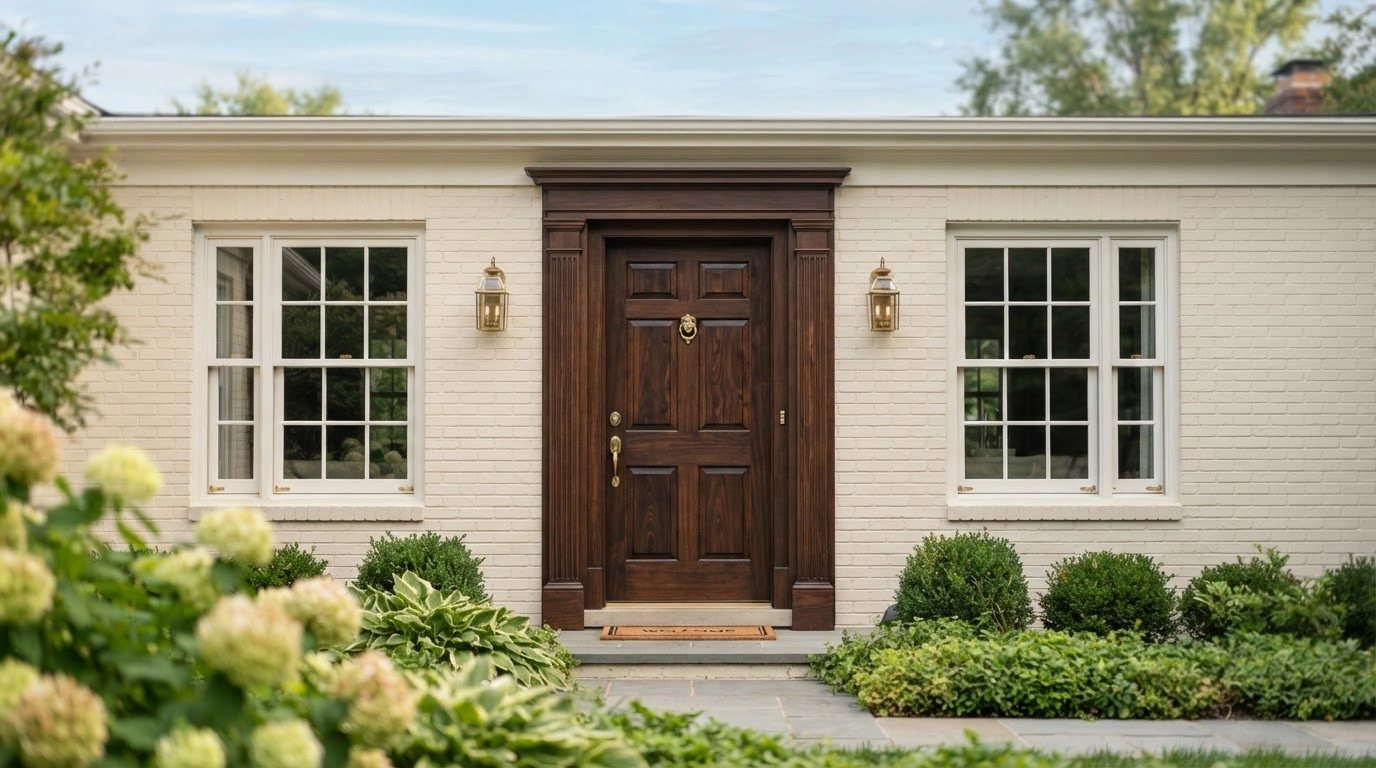
For example, white double-hung windows with colonial grilles can look great with a navy or dark green six-panel front door. The colors are different, but the design stays consistent.
French patio doors with matching grille patterns can maintain that look into the backyard.
Craftsman and Farmhouse Homes
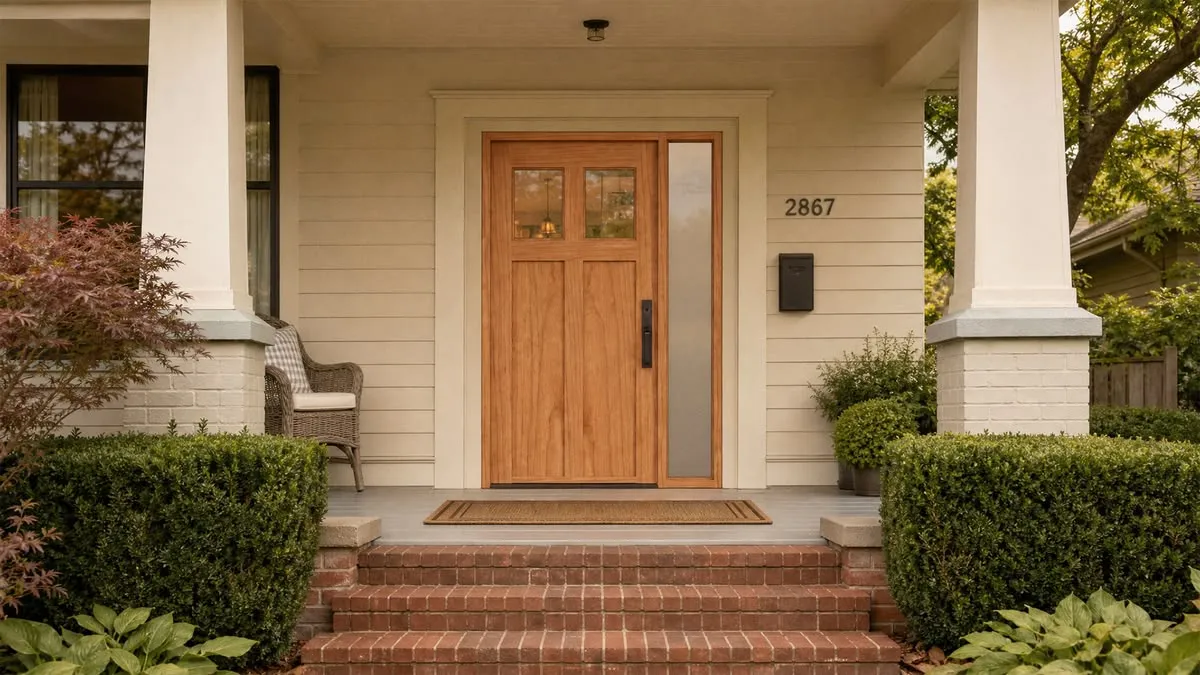
Craftsman homes usually look good with simple, wide trim and natural materials. A wood-look entry door with small glass panels at the top can go well with double-hung windows that have similar upper divisions.
Modern farmhouse homes give you more options. Black casement windows with a natural wood-look entry door add contrast but don’t make the outside look too industrial.
The main thing is to keep things consistent. Mixing fancy traditional grilles with plain, gridless modern windows on the same wall can make the design feel messy.
Mid-Century and Contemporary Homes
Mid-century homes typically highlight horizontal lines, uneven layouts, and links to outdoor areas.
Wide picture windows or sliding doors can go well with a simple flat-panel front door, especially if the door has a narrow vertical glass insert.
Contemporary homes usually look better with fewer decorative details. Big glass panels, simple frames, and plain door designs help everything look coordinated.
If you want a very modern entrance, keep the nearby window designs simple too, instead of adding fancy trim or traditional grilles.
Should Your Windows and Front Door Be the Same Color?
No, your windows and doors don’t have to be the same color to look good together. Often, matching window frames and picking a front door in a different color makes the outside look even better. The main thing is to choose colors that go well with your home’s existing materials.
For example, black windows on a white house create a bold contrast. Adding a wood-look front door can bring in some warmth and still keep things looking modern.
A red brick house with cream window frames might look nicer with a deep green or navy front door instead of another cream one.
Here are some combinations to help you get started:
| Exterior finish | Window frame color | Front door color | Design effect |
| White siding | Black or charcoal | Natural wood-look | Modern contrast with warmth |
| Red brick | White or cream | Navy or deep green | Classic, welcoming entrance |
| Warm beige siding | Bronze or taupe | Dark brown or muted green | Soft, coordinated appearance |
| Light gray siding | White | Dark gray or muted blue | Understated contrast |
| Contemporary white exterior | Black | Black or charcoal with glass | Clean architectural lines |
Don’t pick colors just by looking at online photos. Shades like black, bronze, charcoal, and even white can look very different depending on the manufacturer.
Ask for real color samples and compare them outside next to your siding, brick, roof, and trim. Try to check them in both sunlight and shade, since lighting can really change how a color looks.
Think about which color will stand out most. Usually, windows cover more of your home’s exterior than the front door. Keeping window finishes the same can make things look tidy and gives the front door the appeal of a focal point.
Coordinate Glass Patterns, Grilles, and Hardware
Color is only one part of a coordinated exterior. Glass patterns and frame details can be equally important.
A good example is a home with a traditional divided-light window: installing an entry door with large geometric glass inserts may introduce a completely different visual pattern. Hence, a better choice might be a door with smaller rectangular glass panels or sidelights that match the window style.
Match the Design Language
You don’t need to copy your window grille pattern exactly on your front door. Instead, aim for similar sizes and amounts of detail.
For instance, a Craftsman home with three-over-one window grilles could use a front door with three small glass panels at the top. The patterns aren’t the same, but they have a comparable style.
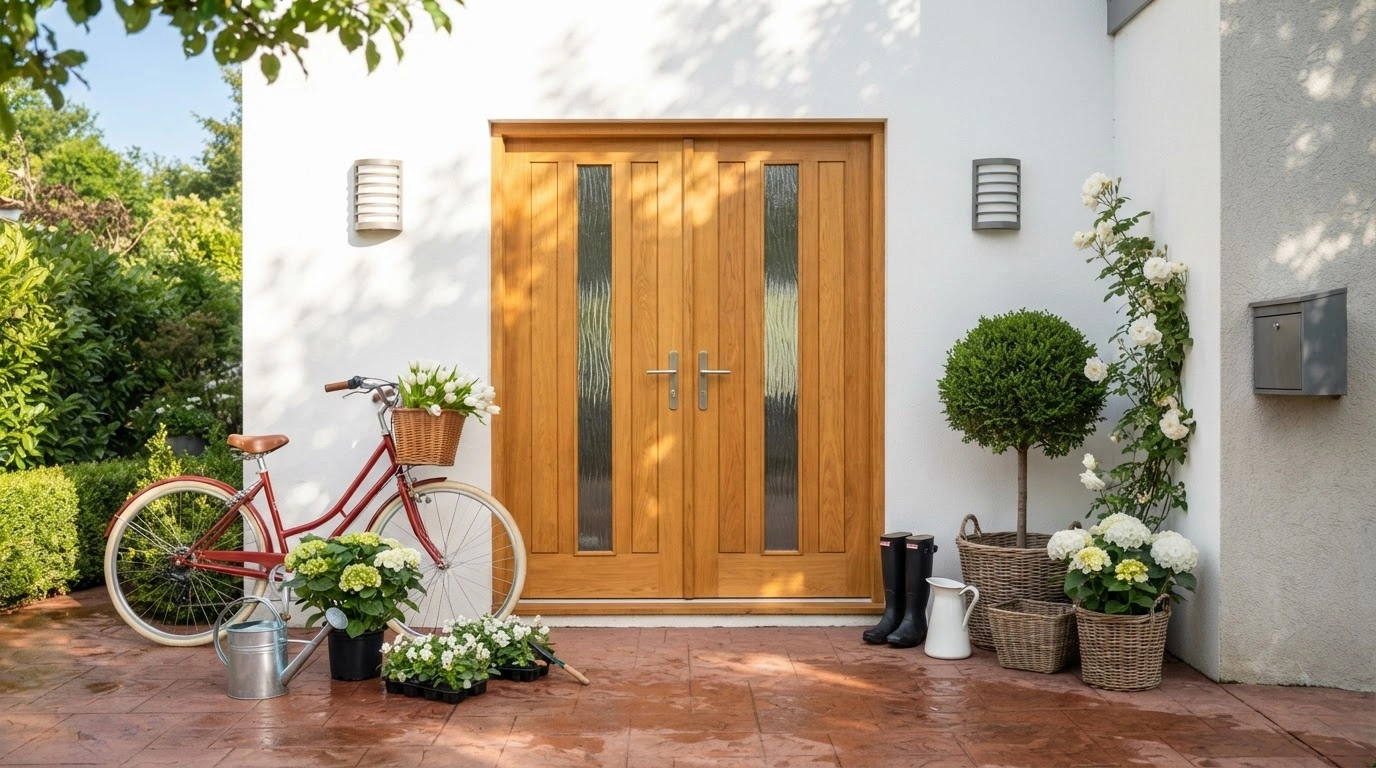
For a modern home with big, plain windows, a door with one simple vertical glass insert might work best.
Keep Hardware and Trim Consistent
Door handles, hinges, window hardware, and surrounding trim should complement the overall design.
Matte black handles look good with black window frames, while polished brass or satin chrome fit lighter, modern interiors.
You don’t always have to match exactly. A classic brass door handle can look great with cream windows and warm exterior colors.
Trim is important too. If you use very different trim sizes or styles around nearby windows and doors, the outside can look mismatched, even if the colors are the same.
Make Windows and Doors Work Together Inside Your Home
A matching exterior matters, but new windows and doors also change how your rooms look inside.
Think about a living room with warm oak floors, off-white walls, and wood furniture. Black window frames might look good outside, but using black inside could add more contrast than you’d like.
Luckily, some window products offer different interior and exterior colors. For example, you can ask your vinyl window supplier to get you a white interior with contrasting exterior finishes. However, availability varies by product line and manufacturer.
This way, you can match dark window exteriors to your roof or siding and still keep lighter frames inside. The same idea works for doors. A dark entry door outside can have a lighter finish inside to match your hallway, as long as the material and finish allow it.
Coordinate Interior Frames With Existing Finishes
Think about the colors and materials that already connect your rooms:
- White window frames can blend in easily with white trim and light walls.
- Wood-look frames go well with oak floors, wood furniture, and warm neutral rooms.
- Black frames fit nicely in modern spaces where you already have dark hardware, light fixtures, or other dark accents.
If your entry or hallway doesn’t get much daylight, be careful with dark finishes inside. By the way, our recent guide to white paint colors for rooms with low natural light has helpful tips for picking wall colors that work with your lighting.
A unified look inside also depends on your furniture and materials. Employing similar wood tones, neutral colors, and matching hardware can help your entryway feel connected to the rest of your home. For more ideas, check out these cozy interior design tips.
Don’t Forget to Match Your Patio Doors
Patio doors can take up as much space visually as several windows, especially in open-concept living rooms. This makes them an important part of your window and door design.
- In traditional homes, French patio doors work well with double-hung windows and classic entry doors. Employing similar grille patterns and frame finishes keeps the look consistent.
- In contemporary homes, sliding patio doors often pair nicely with large picture windows. Their wide glass panels connect indoor and outdoor spaces without adding extra decoration.
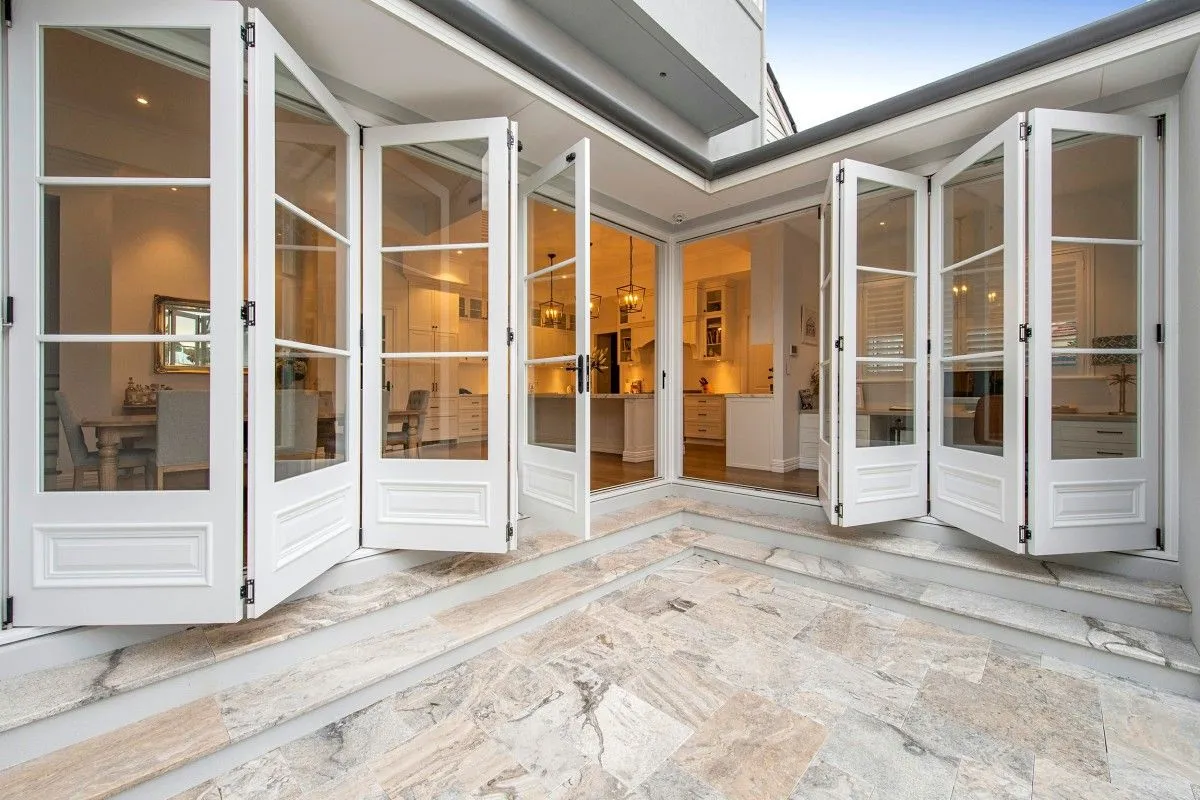
Folding glass doors can also fit modern homes with large openings. Just keep in mind that their multiple panels and frames should match the nearby windows.
But don’t pick a patio door just because it looks good. Think about opening space, accessibility, thresholds, weather protection, and how much wall space you have before deciding.
Replacing Windows and Doors in Stages? Plan the Final Look First
It’s not always practical to replace every window and door at once. Many homeowners start with the front entrance or the windows that need the most work and upgrade over time. The challenge is that product colors, frame styles, or grille options might change between purchases.
A simple replacement plan can help you avoid these issues.
- Decide on the final look you want. Pick the window style, exterior colors, grille pattern, and front door design before you order anything.
- Write down the exact product details. Keep track of manufacturer names, model numbers, finish codes, hardware choices, and grille sizes. Just saying “black window frame” might not be enough to match later.
- Focus on the most visible spots first. If you need to work in phases, try to finish the street-facing windows and front entrance together. This helps keep the main part of your home looking consistent.
- Measure your current openings before you order. Door slab size, frame size, and rough opening are all different.
- Fix what you can instead of replacing everything. If your entry door is solid but has damaged trim or a small frame issue, it might be better to repair it.
If you’re mixing products from different brands, ask for real samples instead of just looking at digital catalogs.
Choose Windows and Doors as One Design
The best-looking window and door combinations have a consistent style, even if the colors or materials are different.
Begin by thinking about your home’s style and size. Then match frame colors, glass patterns, trim, and hardware. Think about how everything will look both outside and inside, especially in rooms where you see several windows and doors together.
If you’re planning to replace windows and doors, ask your supplier for a design proposal that shows the styles, colors, and setups you’ve picked before you order.
Taking a little extra time to plan can help you avoid mismatched finishes, feel more confident about your choices, and create a home that looks well-designed from the front door to the backyard.