
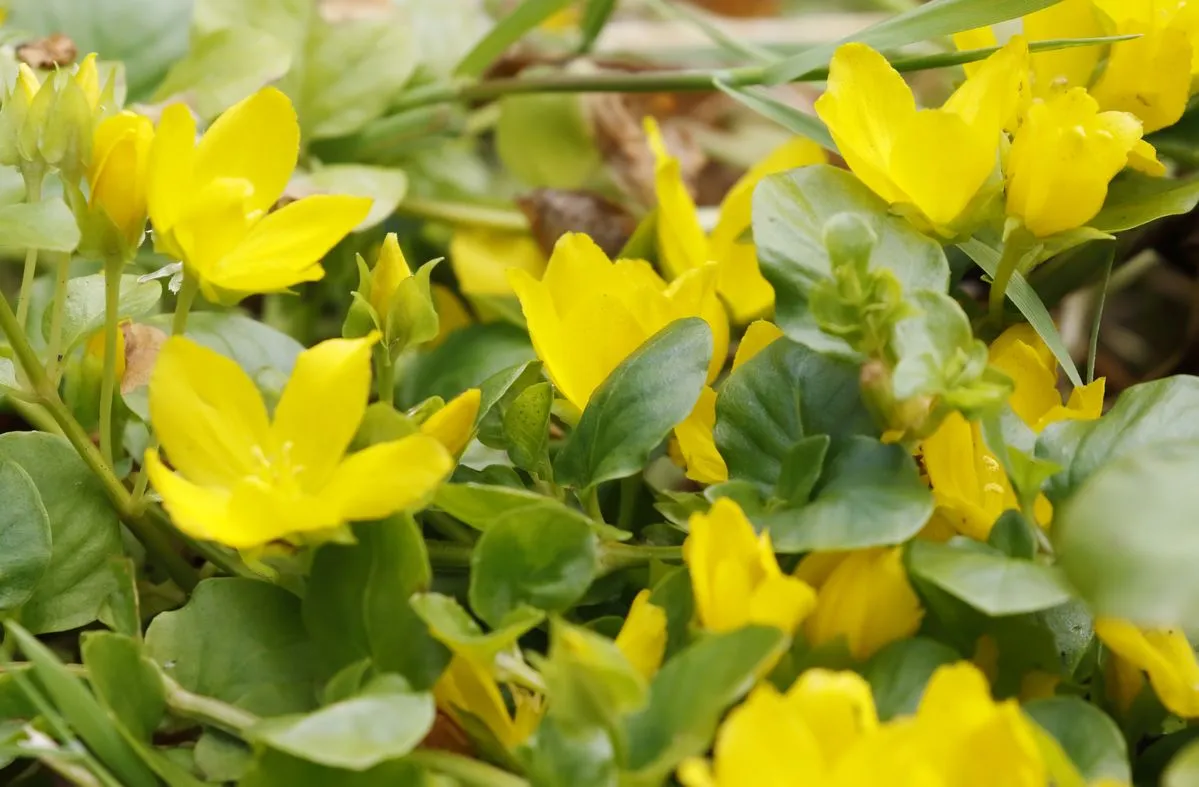
Three plants show up on almost every "pretty yellow ground cover" list, and they are the same three that gardeners write to extension offices about two summers later. Creeping Jenny, lesser celandine, and Japanese honeysuckle all look harmless at the nursery or in a neighbor's border. Then they move. If you planted them on purpose, or inherited them with the house, this is the plan you can also follow, in the order I would do it.
We included all three in our roundup of ground covers with yellow flowers, with a short warning that they spread. This article follows up on how to get them out and what to put in their place.
Identify "Creeping Jenny" You Have
This trips up more people than any technique. Creeping Jenny (Lysimachia nummularia, also called moneywort) has round, coin-shaped leaves and yellow cup flowers. Creeping Charlie (Glechoma hederacea, or ground ivy) is a mint relative with scalloped leaves and small purple flowers, and some regions also call it creeping Jenny. They are different weeds. Advice written for one often fails on the other, so check the flowers before you buy. Everything below is for the yellow-flowered Lysimachia.
Creeping Jenny: Pull It All, Then Smother It
Creeping Jenny spreads by trailing stems that root wherever they touch moist soil. That is why a quick tug rarely works. You pull the top and leave a dozen rooted nodes behind.
Here is the sequence that makes sense to me:
- Water the garden bed the day before. Damp soil lets whole runners slide out instead of snapping.
- Pull by hand or with a hand fork, following each runner back to where it starts.
- Rake the bed and pick out every loose stem piece. Fragments re-root, so this step matters more than the pulling.
- Lay 3 to 4 inches of mulch over the cleared area, or cover it with a tarp for a season.
- Walk the bed every two weeks and pull whatever comes back.
It took me approximately 3 hours to clear creepy Jenny in a 100-square-foot garden area. I followed the usual routine and watered the soil a day before. Then I loosened the rooted runners, pulled them with a hand fork, and covered the area with a 3-inch layer of mulch after raking up the leftover stem pieces. Over the next two months, I noticed the plant returned three times around the edges and from missed rooted nodes.
The honest tradeoff is that this is slow. Hand removal beats herbicide in a mixed bed, because anything strong enough to kill creeping Jenny will also hurt the perennials growing through it. In a lawn, a broadleaf lawn herbicide is the last resort, and only if you follow the label exactly. If you love the look, keep it in a container where it spills over the edge and cannot run.
Lesser Celandine: It Is a Timing and Tuber Problem
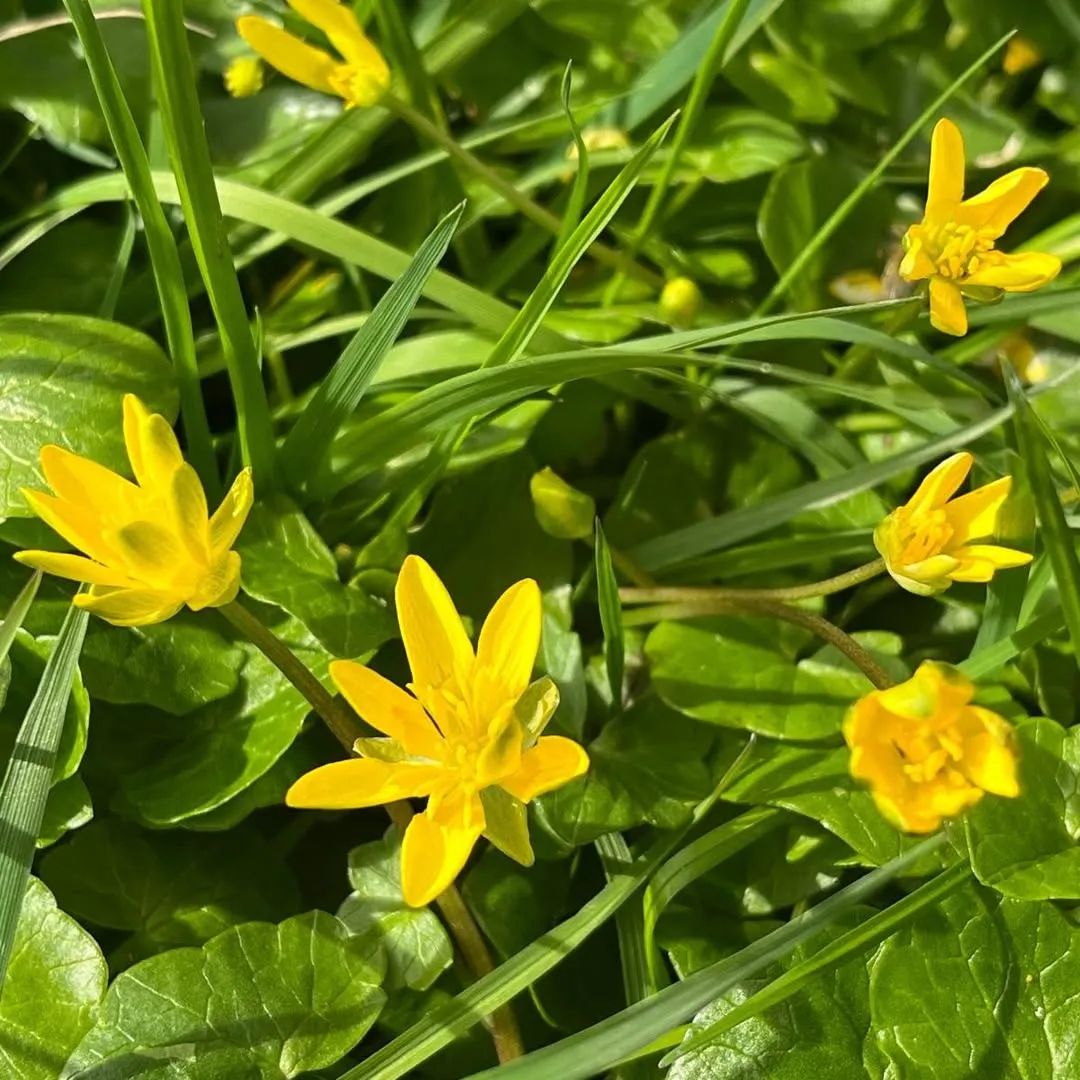
Lesser celandine is the one I would be most careful with. According to the Oregon State University Extension guide to lesser celandine, it spreads by seeds, tubers, root fragments, and stem bulbils, and removing the tubers and root pieces from soil is difficult enough that you should expect regrowth. They rate it as high effort and only somewhat effective once it is established, which matches what most people experience.
The window is short. It sprouts early in spring, flowers in March and April in most of the eastern US, and is usually gone by June. So you work in late winter and early spring, before flowering and the bulbils form.
A few tips that would work:
- Dig, do not pull. Take the top few inches of soil with the plant and sift out the small tubers. A tuber broken in half can still make a new plant.
- Bag everything. Bulbils and tubers survive a home compost pile because most piles never get hot enough. Put the material in the trash or your municipal green waste.
- Do not mow it. Mowing seems logical, but it backfires by scattering bulbils across the lawn.
- Do not rototill. Tilling chops tubers into more tubers.
- Plan for several years. A multi-year effort is standard advice from land trusts and extension services alike.
I observed that lesser celandine occupied the larger area I expected. I tried, but separating the small tubers from the soil was challenging. I dug up the plant and removed as much soil as possible around the roots before it flowered. In the second spring, I noticed the plants covered a smaller area, and new plants popped up around the edges and where I'd missed small tubers. This means the real challenge is underground tubers, which can’t be sorted by removing only visible leaves.
One More Edge Case: If the patch sits near a stream or floods in spring, remove every tuber and bulbil. Floodwater carries them downstream and starts new colonies on someone else's land.
Japanese Honeysuckle: Cut the Vine, Then Deal With the Stump
Japanese honeysuckle (Lonicera japonica) is a woody, twining vine that is now considered invasive in about 26 eastern states. You can tell it from native honeysuckles even in winter because its stems are brittle and hollow, with peeling bark. It climbs shrubs and young trees, and it also runs along the ground, rooting at the nodes.
Small plants and seedlings are easy. Pull them when the soil is damp, which in most regions means fall, and get the roots out with the stem.
Established Vines Test Patience:
- Cut the vines at the base so the top growth dies and stops shading the plant it is climbing.
- Use hand pruners to untangle vines from small trees and shrubs. Pull gently so you don't strip the host's bark.
- Treat the cut stump. The University of Maryland Extension describes a glyphosate solution of about 25 percent for cut stumps and 2 percent for leaves. Read and follow the product label, wear gloves and eye protection, and keep it off desirable plants.
- Check the area every few weeks through the next growing season and cut anything that sprouts.
- If you want to avoid herbicide, repeated cutting works but takes much longer. Expect to be at it for more than one season. Mowing is a poor choice, because the vines climb and tangle in the mower.
What to Plant Afterward?
Bare soil is an invitation. Whatever you remove, replace within a few weeks, or the next wave of weeds will fill the gap. For shade, where celandine and creeping Jenny love to live, foam flower, bigroot geranium, and Pennsylvania sedge are sensible native-friendly choices. If you still want yellow, our guide to perennial ground covers with yellow flowers lists better-behaved options with USDA zones, and golden star (Chrysogonum virginianum) is the one I would try first in a shady spot. For a climbing vine to replace the honeysuckle, coral honeysuckle, crossvine, and Carolina jessamine are native choices that don't bully their neighbors.


