Gnats are tiny flying insects that can quickly become a household nuisance, particularly in the summer months. These insects usually gather in the kitchen or hover around fruit bowls. They can contaminate food areas and create unhygienic conditions in homes.
However, eliminating them can be easy with a few effective techniques using basic household materials. This guide outlines several proven methods for creating successful gnat traps.
What Are the Types of Gnats?
Gnats are very common insects that are mostly found indoors. Since gnat species differ in their appearance, behaviour, and breeding habits, identifying the type of gnat you’re dealing with is essential for choosing the right fly control.
Fungus Gnats
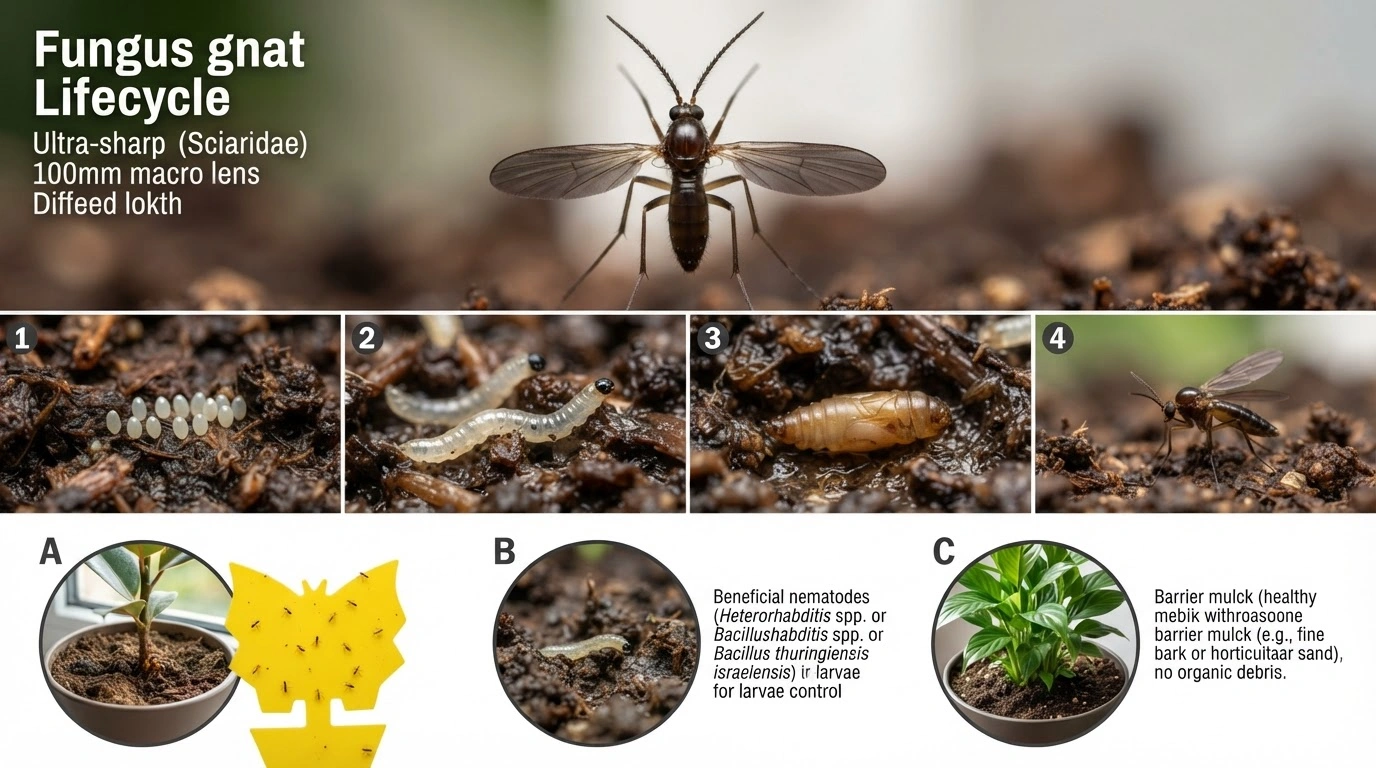
Fungus gnats are tiny flies that are mostly found around houseplants and wet or damp soil. They are mostly considered a nuisance, which means they are annoying but usually don’t cause serious harm. However, a large number of fungus gnats can damage the roots of the plant. Most fungus gnat species commonly found around houseplants belong to the Bradysia genus.
These gnats are dark gray to brownish-black in color with lighter, translucent wings. They are about 1/6 to 1/8 inches long (about the size of a pea or a grain of rice) and are mostly found around overwatered houseplants, windowsills near plants, and sometimes around the sinks if the area is prone to moisture.
Buffalo Gnats (Black Flies)
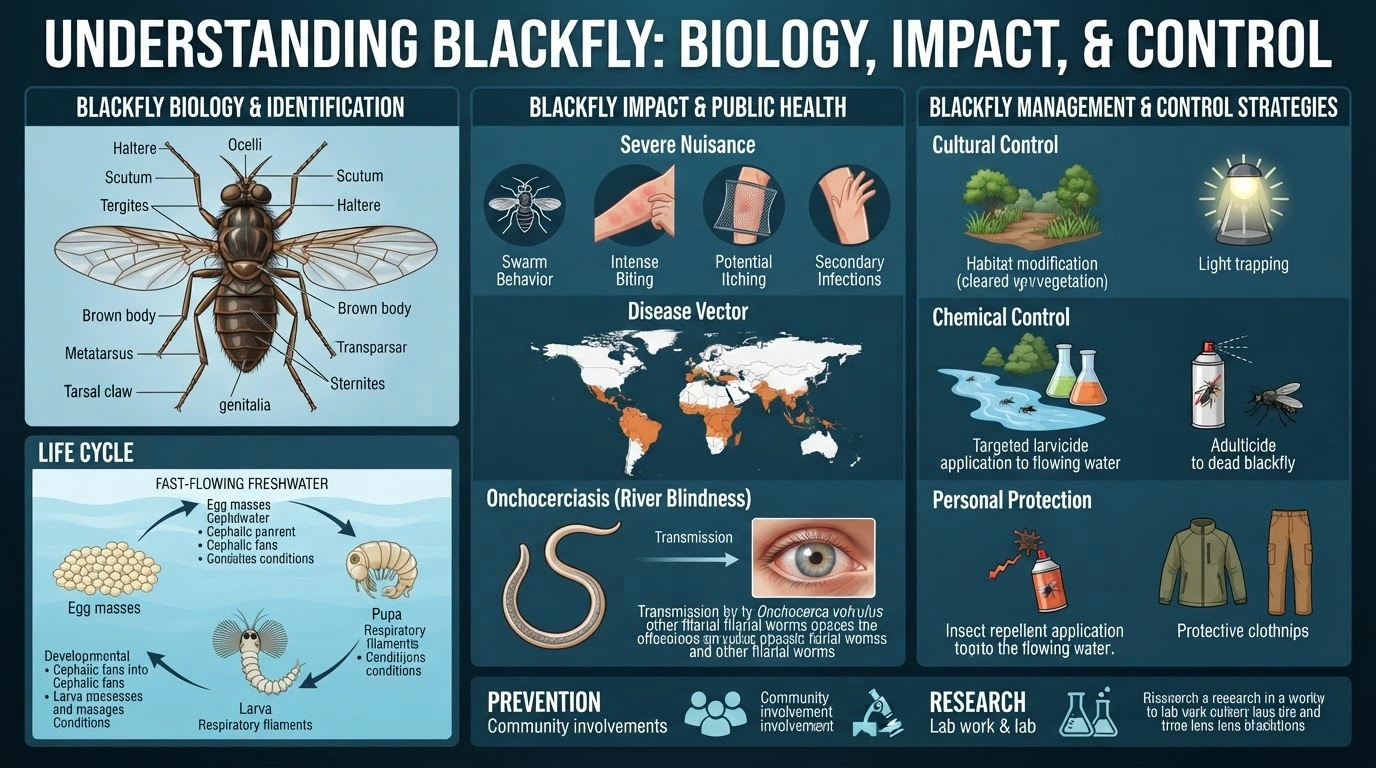
Buffalo gnats are also known as black flies that are mostly active outside near moving water. They are biting pests and are a part of the Family Simuliidae. They are about 1/6 to 1/8 inches long and are dark gray to black in color, with a slightly humpbacked body shape.
Buffalo gnats do not breed indoors,and are mostly found near rivers, streams, ponds, or wet areas. However, they may accidentally enter the homes, They are mostly active during spring and early summer and are aggressive daytime biters.
Eye Gnats
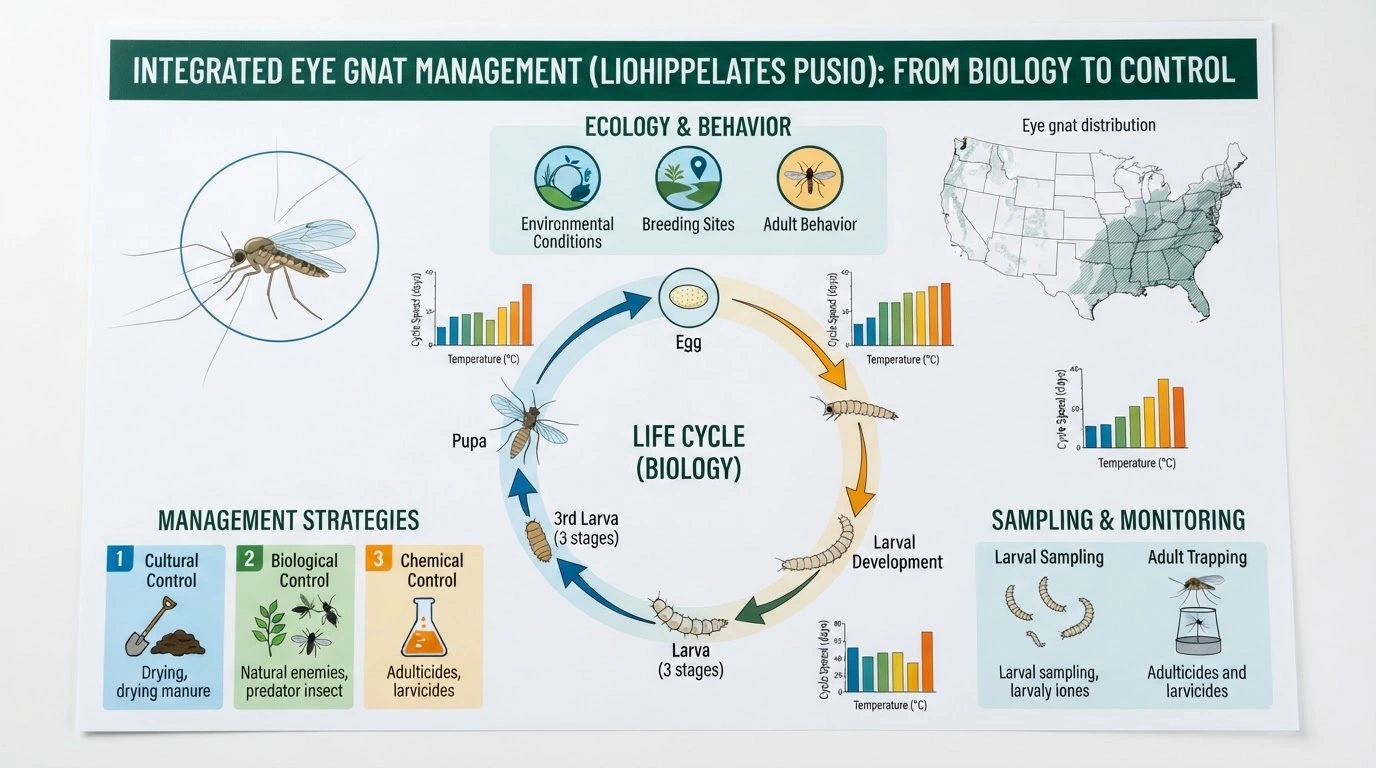
Eye gnats or Hippelates are tiny, but fast-moving pests that usually hovers around the eyes, nose, and mouth of human beings. This is because they are attracted to the moisture around these areas. They are roughly the size of a rice grain (about 1/16 inches long) and have gray to black color with transparent wings.
Though they do not bite or sting, they can be a nuisance to the plants and humans. Since they often tend to swarm around the eyes, they may also cause eye irritation.
What Causes Gnat Infestation in Home?
Gnats invade your home when the conditions align. Moisture, decaying organic matter, etc., all can attract them to the house.
Moisture
Gnats are attracted to moist soil in the pot, to the standing water in saucers, sink drains or potting trays. Excess moisture can cause high humidity levels, which makes the perfect breeding ground for gnats.
Food Source
Gnats feed and breed on organic matters. Overripe fruit on counters ferment faster, which attracts gnats. Also, if the leftover food in the pet bowl is left as it is, it can become a food source for the gnat, especially when it starts to decompose.
Open Trash Bins
Compost, trash cans, and recycling bins, in addition to pet food spilled alcohol, or vinegar can also cause gnats to lay eggs on them and multiply their population.
Overwatering
Overwatering the indoor potted plants is another cause for gnats in homes. This creates the perfect habitat for fungus to thrive inside the home.
Gaps or Cracks in Windows
Window cracks and gaps also allow the gnats to crawl in and cause havoc to the plants.
How to Get Rid of Gnat Infestation?
You can either opt for homemade solution or buy commercial products to eliminate gnat from your home. Read below to understand your options -
Homemade Traps
These are a few traps that can be prepared using available materials in the kitchen. They are often easy to prepare and implement, thus avoiding any additional expense on purchasing a trap.
The Vinegar and Soap Method

This is one of the most popular homemade gnat traps that requires readily available items like vinegar, sugar, and dish soap. Here is how to prepare the trap:
-
Take a container and mix white vinegar, sugar, and add a few drops of dish soap.
-
To this, add a ½ cup of warm water.
-
Use a plastic wrap to cover the bowl and make it tight around the rim. Make sure to poke several small holes in the top.
-
Place this container near the areas where gnats are frequently seen.
This mixture is effective because it smells like overripe fruit or fermentation, which strongly attracts gnats. Once gnats find the container with this mix, they will climb and fall through the holes. This trap will cause them to drain into the mixture.
Mason Jar Trap

In this method, a Mason jar acts as the trap. Any clean jar, like an empty spaghetti sauce or peanut butter jar, also works well. A piece of parchment or plain paper is rolled into a cone and placed at the jar’s opening. At the bottom, a bait mixture of apple cider vinegar and a small amount of dish soap is added to attract and trap the flies.
Fruit Bowl Trap

This method involves a simple setup with water, fruit, and plastic wrap to capture gnats effectively. It is easy to put together at home and works best when placed near the kitchen counter or fruit bowl. Here is how to make this trap:
-
Take a large bowl, and add 2 cups of water to it with a minimum of 1 inch of water in the bowl. To this, a few drops of food colouring can be added.
-
Place a smaller bowl inside the larger one. Fill the smaller bowl with cut fruit. Bananas work best, but grapes or other fruits can also be used. The smaller bowl with fruits should not be filled with water since it may end up spoiling them quickly.
-
Cover the large bowl tightly with plastic wrap, ensuring there are no gaps around the edges.
-
Use the tip of a knife to poke small holes in the plastic wrap, about the size of a pencil lead. They should be spaced 1½ to 2 inches apart. Make 5 to 6 holes above the fruit cup.
-
Position the trap near the fruit bowl or kitchen counter for best results.
Candle and Water Method

Lights can attract gnats, making them one of the viable traps for them. Using candles can be very useful because the light or flame of the candle has the ability to attract gnats. To implement this method, make sure to use both candle and water. Here is how to use it:
-
Place a candle in an empty holder or tray.
-
Fill the tray with water so the candle base sits inside it.
-
Light the candle in the affected area and turn off other lights.
Those gnats that fly into the flame will burn, and those that move toward the water will drown.
Wine Trap

Gnats are strongly attracted to the scent of wine, especially sweeter varieties. A simple trap can be made using a wine bottle with a small amount of leftover wine.
To lay this trap, leave a small amount of wine in the bottom of the bottle. Place this bottle near the area where gnats are present.
Commercial Traps
In case homemade traps fail to capture gnats, using commercial traps can be a more effective option. Here are a few commercial traps that can be used to eliminate gnats.
Sticky Traps
Sticky traps work by using a strong adhesive to capture gnats. To use this, simply unfurl the trap and hang it in the area where the insects are most active.
Electric Traps
Commercial electric traps are often found in restaurants or business places rather than in houses. They are used to capture larger flies using zappers because flies are attracted to the light present in the trap.
A key advantage of these traps is that they operate continuously. However, they need regular maintenance because the light bulbs lose effectiveness over time and must be replaced.
Homemade Vs. Commercial Traps: Which One is Considered the Best?
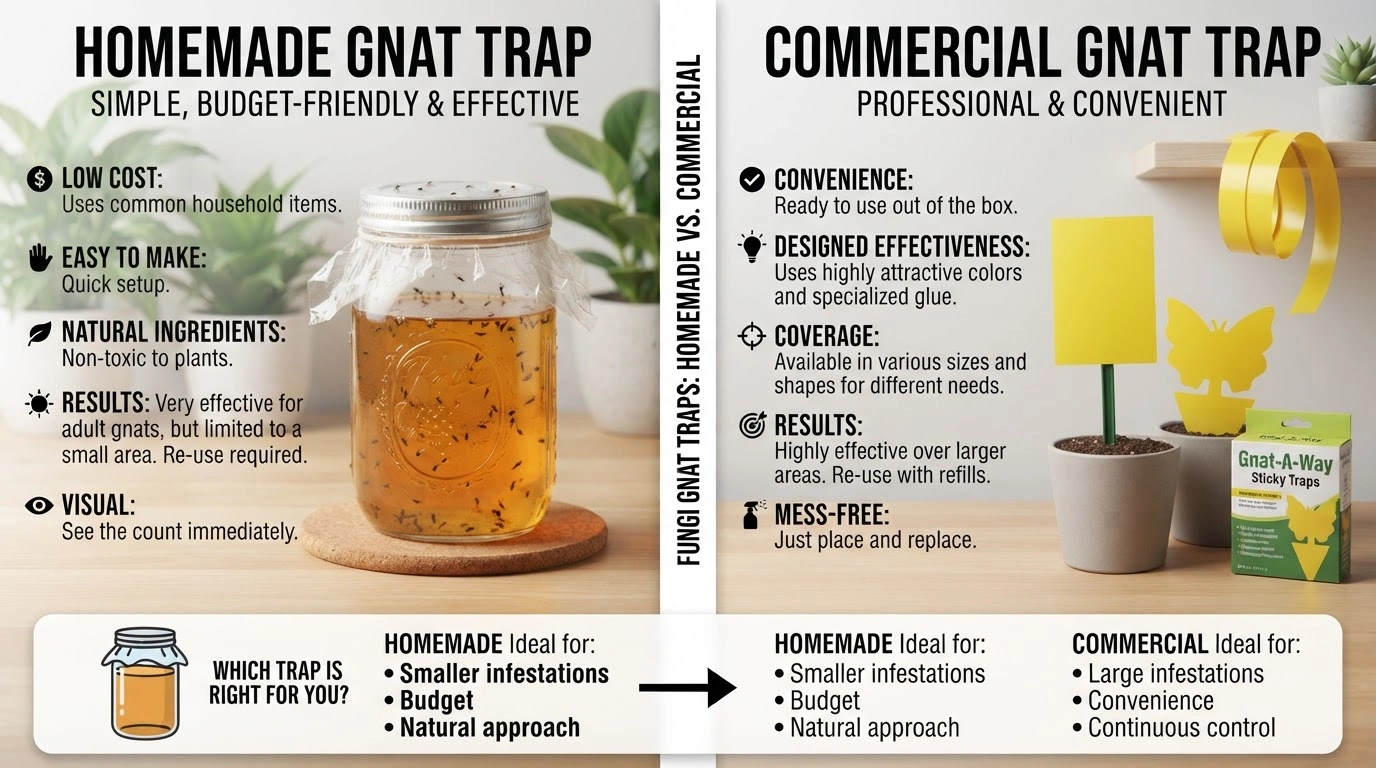
To understand which one works better, here are some pros and cons to be considered
Homemade Traps
| Pros | Cons |
|
|
Commercial Traps
| Pros | Cons |
|
|
Which Trap Should You Choose?
If you are still wondering, which one’s best for you, the answer depends on your lifestyle choices, the extent of the infestation, and budget.
- If you have a huge infestation and need a long-term and effective solution, consider commercial traps.
- If the size of the infestation is small and you want a quick, budget-friendly fix, you can opt for homemade or DIY solutions.
How to Prevent Gnat Infestation at Home?
You must take necessary precautions to prevent gnat from coming back again. It usually involves three major steps so that they do not become a problem again. Here’s how to prevent gnat infestation -
- Use exclusive methods such as window and door screens to prevent flies from entering the home.
- Fruits should be kept covered or stored in the refrigerator, as decaying or overripe fruits may attract these flies. Keep other food items in sealed boxes.
- Keep the trash cans, sink drains, and food containers clean. This ensures that there’s no moisture or organic material.
- Do not overwater the soil and let it dry completely between watering.
- If required, use diatomaceous earth for added protection.
- Cover the potted soil with a landscape or mesh fabric to prevent adult gnats from laying eggs.
- Check new plants, groceries, or potting soil to see if there’s any larvae or flies buzzing around. If you find any, isolate that plant.
Conclusion
Homemade traps may not completely eliminate gnats, but they offer a simple and cost-effective way to reduce their presence indoors. For more severe infestations, commercial solutions designed specifically for gnats are often a more reliable choice. The key to choosing a method is considering your goals, how fast you want it to work, and your budget, too. However, if the infestation is out of control, you might need to call a professional for gnat inspection and removal.