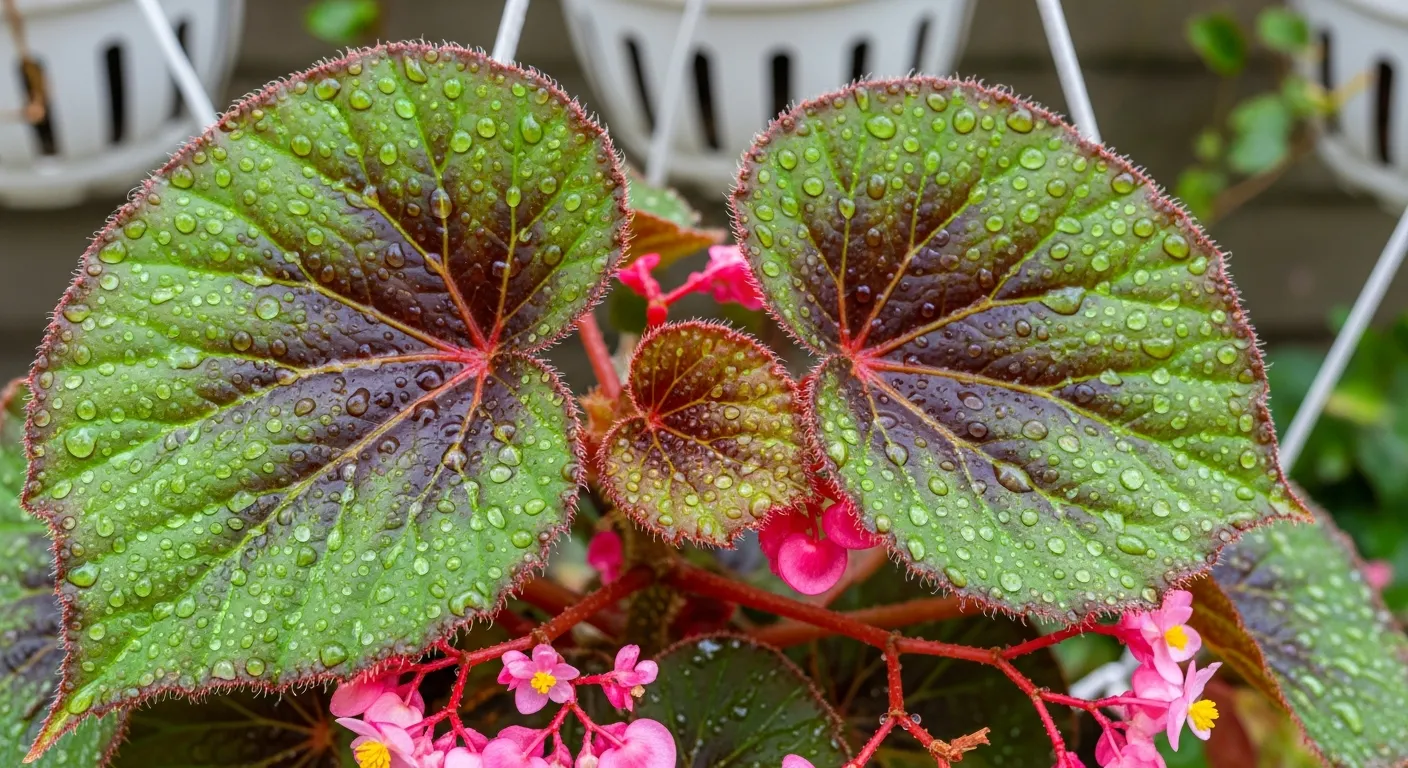
Begonia is an eye-catching houseplant that comes in several forms. One of the most popular forms is the cane begonia, named Angel Wing for its beautiful, wing-like shape. It is native to the Brazilian rainforest and thrives in moist, humid, shady conditions. When watered appropriately and properly cared for, these plants can grow within 6 weeks.
However, when watering, be careful, as over- or under-watering can cause the leaves to turn yellow or the roots to rot. Though Angel Wing begonias love moist soil, they should never be left in consistently wet soil because it can stress the plant and make it vulnerable to pests and diseases. This blog aims to help you understand the Angel Wing begonia watering schedule to enjoy lush foliage and beautiful blooms.
How Often Should You Water an Angel Wing Begonia?
Angel Wings begonias can grow faster when watered at the right time, but not too frequently. Also, they are a bit more forgiving of over-watering than other houseplants. The watering needs usually depend on several factors, such as the environment, the season, and the plant’s growth stage.
During the summer, it is advisable to water indoor plants weekly. However, if your plant is outdoors, water it every 2-3 days, especially during intense heat. Reduce watering frequency to every 10-14 days during winter, as natural growth slows. Also, the weather becomes cooler with fewer daylight hours, and the soil doesn’t dry out as quickly.
If you keep plants indoors during winter, you should know that the heater can dry out the surrounding air. This can cause the leaf edges to become crispy. To prevent this, consider placing the pot on a tray filled with pebbles and a small amount of water.
How to Tell When Your Angel Wing Begonia Needs Water?
Here’s how to tell if the Angel Wing Begonia needs water -
- Dry Top Inch of Soil: If the top inch of soil gets dry to the touch, then you need to water the plant.
- Wilting Leaves: If you see wilting or drooping leaves, water them immediately.
- Lightweight Pot: Lift the container, and if it feels lighter than usual, it’s an indication that the soil has dried up.
- Finger Test and Moisture Meter: Insert your finger into the soil (about 1-2 inches deep). If it feels dry, you should water the plant. You can also use a Soil Moisture meter for a precise, objective reading.
How Much Water Does an Angel Wing Begonia Need?
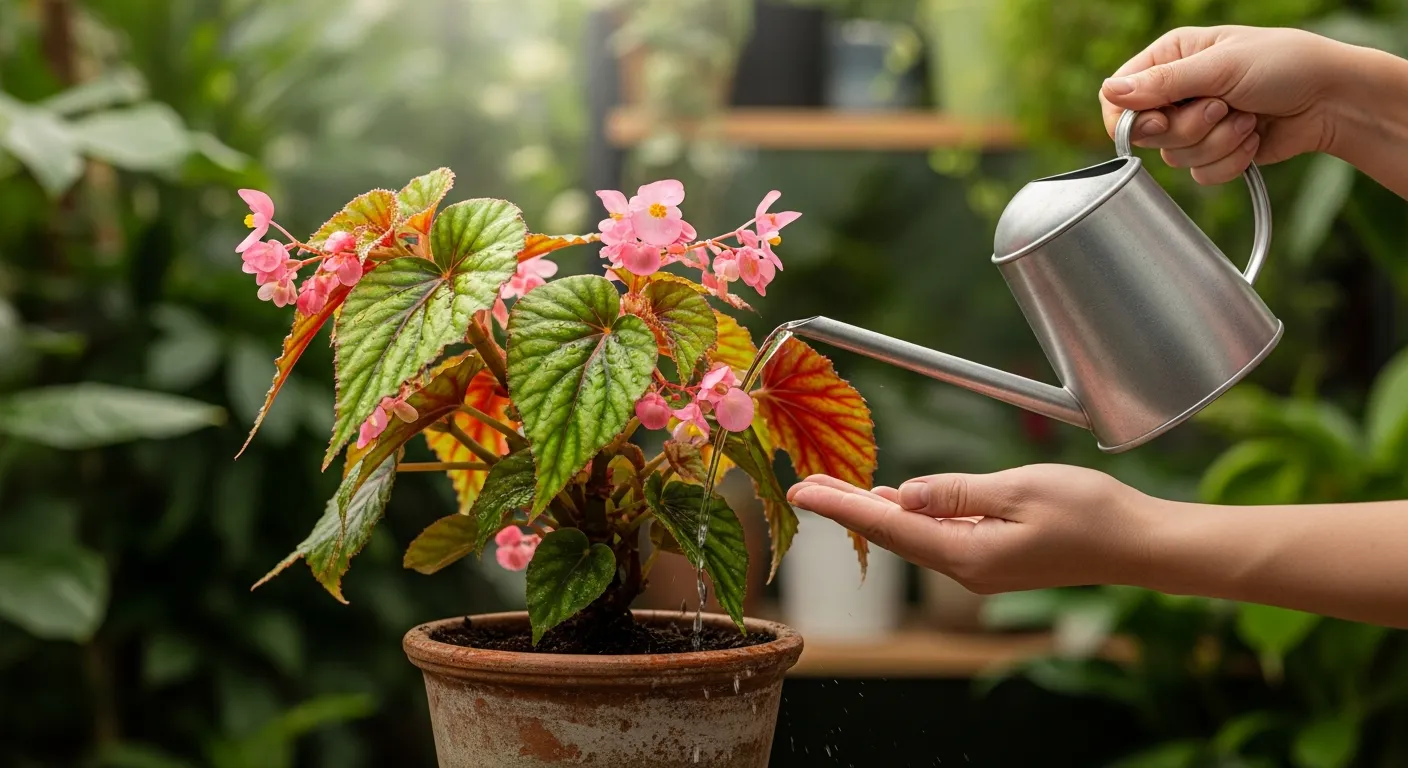
Angel Wing Begonias are fast growers if kept under the right conditions. You can water them moderately and consistently, but not too much. If the other conditions, such as light and warmth, are right, then just keep the soil moist. When watering, keep these factors in consideration -
- Water the plant thoroughly.
- Avoid leaving water in the saucer to avoid root rot.
- Ensure that the pot has drainage holes.
- Avoid letting them dry completely, as this may cause the leaves to become crisp.
In addition, make sure to saturate the soil thoroughly. Their roots are quite thin and fibrous, and every root needs a proper amount of water.
Best Watering Method for Angel Wing Begonia
To water the Angel Wing Begonia, here are some expert tips you must remember -
Bottom Watering vs. Top Watering
Most gardeners prefer bottom watering rather than pouring water from the top. It helps prevent soil erosion and ensures the roots absorb water thoroughly without pooling. To water from the bottom, place a water-filled shallow dish underneath the pot for 20-30 minutes.
Morning Watering
Water the begonias early in the morning, as this allows excess moisture to dry out and reduces the chance of root rot.
Avoid Making The Foliage Wet
It is best not to let the foliage get wet. It is not advisable to pour water from the top, as it can wet the stem and leaves, which trap moisture and can cause leaf disease.
Signs of Overwatering and Underwatering
Indicators of Overwatering
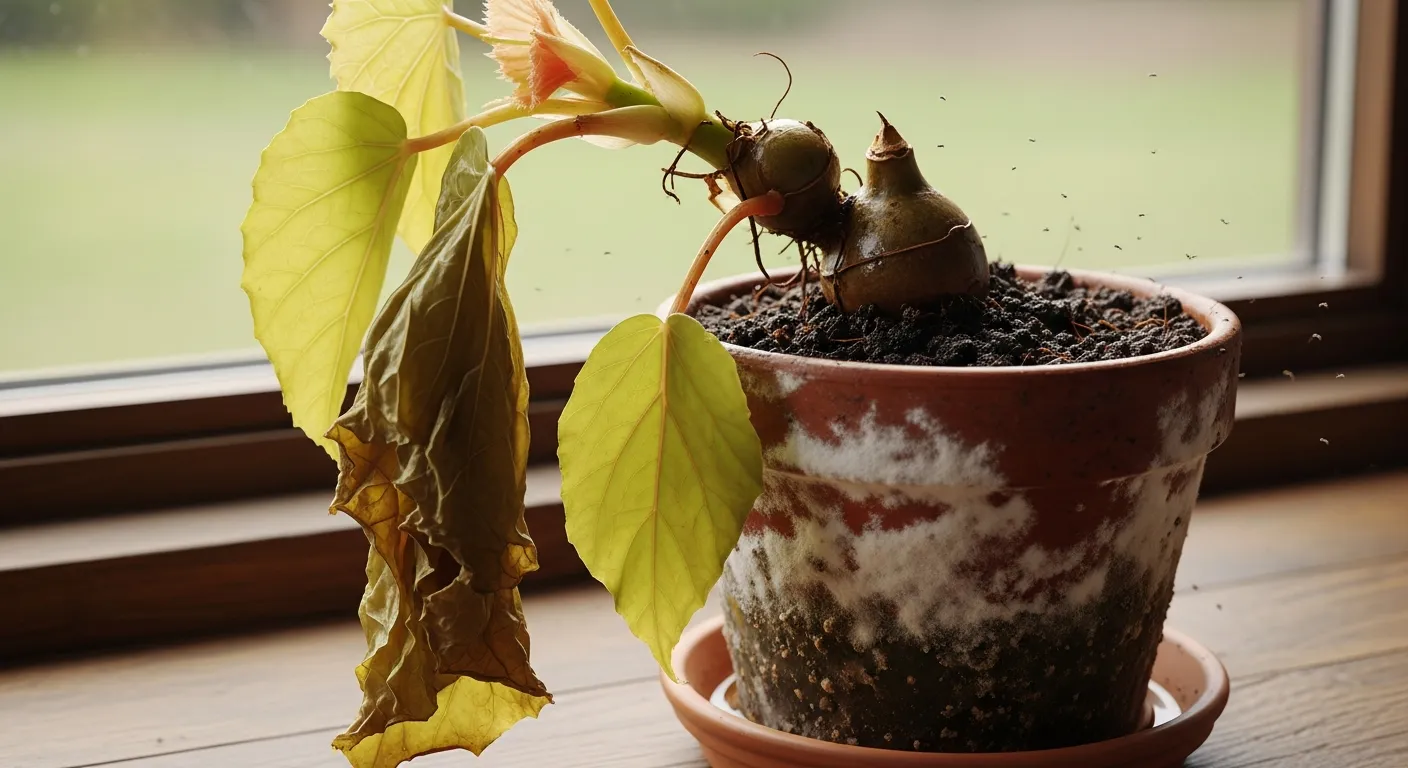
- Yellow Leaves: If you notice the leaves turning yellow and feeling mushy, the plant may be receiving too much water.
- Mushy Stems: Stems can become soft and mushy if overwatered.
- Root Rot: When the soil becomes waterlogged due to overwatering or poor drainage, the roots start to smell like rotten eggs, and a white, fuzzy layer can be seen on the surface.
- Pests: Fungus gnats can be found around the plants, which are attracted to excessively wet soil.
Indicators of Underwatering
- Brown Crispy Edges: Leaf margins will turn dry and crispy instead of mushy.
- Drooping Foliage: The whole plant seems to be curling inward, causing it to wilt.
- Dry Soil: The top inch of soil feels dry to the touch, and it may also pull away from the edges of the pot.
Seasonal Watering Tips
As seasons change, so do the watering needs for Angel Wing Begonia. Here are some watering tips for Angel Wings Begonia as per the season -
Spring & Summer
Spring and summer are the two seasons when the plant is most active, grows new leaves, and produces more flowers. The plant needs proper watering throughout the growing phase. While you will be watering the plant often, it is also best to use water-soluble fertilizer.
Fall
As temperatures drop in the fall, begonias slow down. The soil stays mostly moist, which is a hint to water the plant less. Reducing the watering frequency helps the plant to prepare for the next phase.
Winter (Dormancy Adjustments)
During winter, many begonias, especially tuberous types, enter a resting phase in winter. So, stop watering the plant and allow the stem to die back naturally. Also, dig the plant and store it inside where it does not get exposed to frost.
Best Soil and Pot for Proper Watering
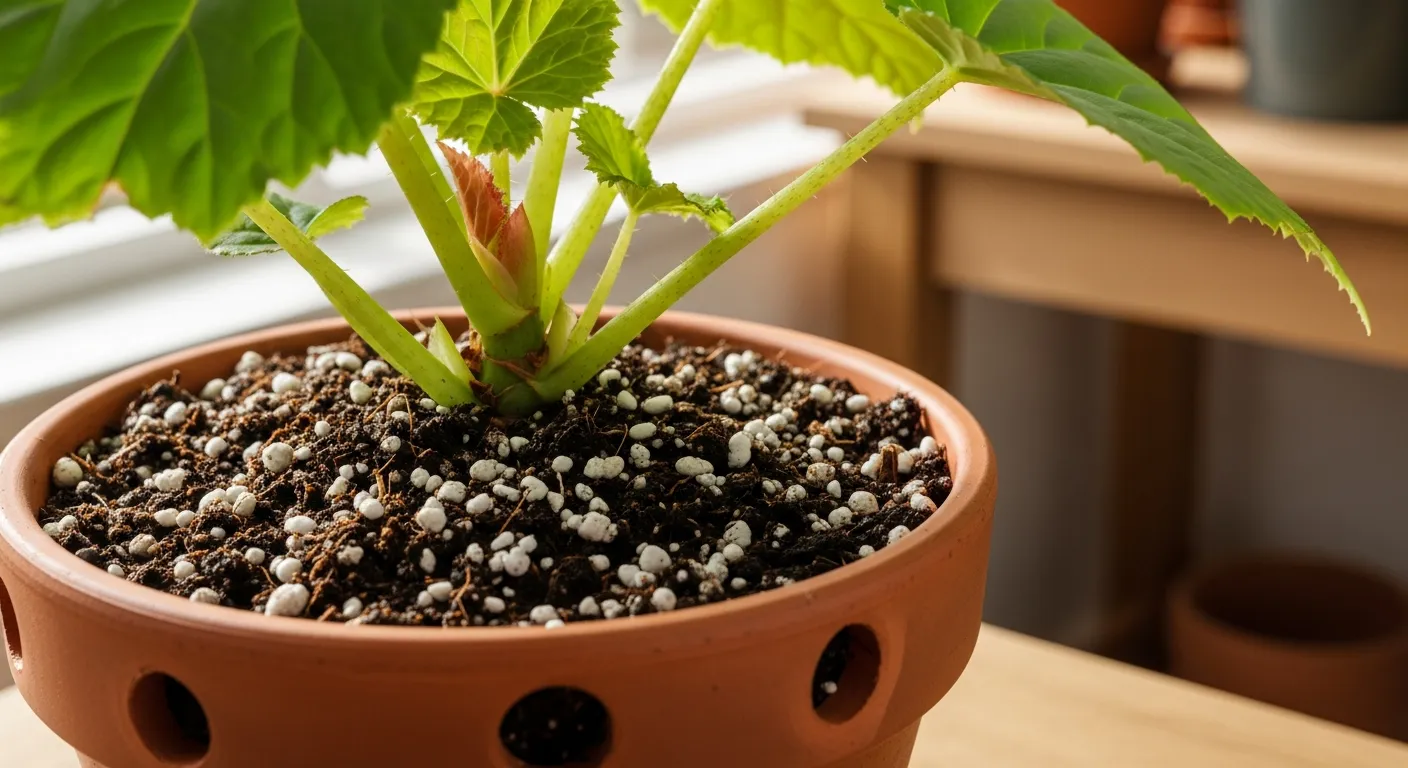
Begonias prefer soil that contains organic matter to retain moisture. You can use a generic houseplant soil, which can be mixed with compost; however, avoid using peat. This is because heavier soil can weigh down the tall stems (if you have Cane Begonias).
In addition, perlite is recommended, as these plants have delicate root systems and are prone to root rot. Perlite prevents the soil from compacting, ensuring proper drainage and airflow. You can use 25-30% perlite. This ratio keeps the soil aerated well and retains enough moisture for the plant to thrive. When potting, remember to use terracotta or clay pots with good drainage to help remove excess moisture.
Conclusion
While these Brazilian natives are somewhat forgiving, their thin, fibrous roots thrive on slow, consistent watering. Keeping the soil evenly moist can help keep diseases at bay and keep the plant healthy. You can check if the plant needs water by touching the soil; if it feels dry, it needs water. If the leaves are wilting or the pot seems heavy, it has enough moisture, and you must cut down on watering.