If your vacuum smells like hot dust or has lost its pull, the filter likely needs attention. A common slip-up for many homeowners is buying the wrong filter and compromising on essential features. A genuine filter from Shark, Dyson, or Bissell can cost three to six times what a generic one does, and the two often look identical in a product photo. So is the markup buying you anything?
Sometimes. For foam and felt filters, aftermarket is usually fine. For the HEPA filter that cleans the air leaving your vacuum, I lean OEM, and the rest of this guide explains where that line sits and why.
The Short Version
| Filter type | What I would buy | Reason |
| Foam or felt pre-motor filter | Aftermarket | Simple media, cheap, replaced often |
| Washable HEPA-style exhaust filter | OEM, or a generic with printed test results | Seal and media quality vary a lot |
| Disposable HEPA filter or bag (allergy household) | OEM | Claims are hard to verify |
| Robot vacuum HEPA filter | OEM unless the brand has been tested | Published tests show most generics leak |
What OEM and Aftermarket Actually Mean?
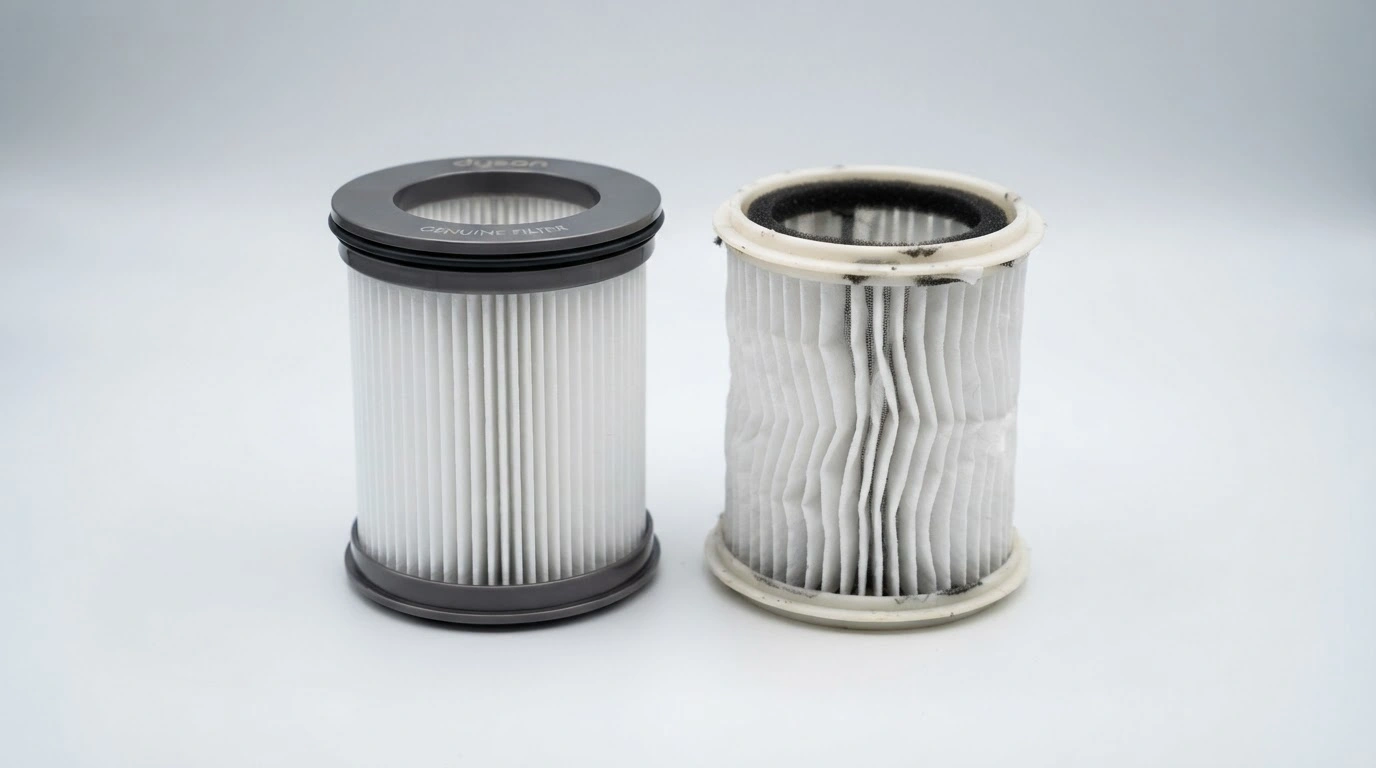
OEM stands for Original Equipment Manufacturer. An OEM filter is the one the vacuum brand sells for your exact model, the same part that came in the box. Other companies make aftermarket filters to fit that model. You will also see them called "compatible," "replacement," or "generic," and those words mean the same thing.
The trap is that "aftermarket" covers everything from a well-made filter cut to factory tolerances to a sheet of thin foam in a plastic frame. Contract manufacturers also build many OEM filters, so the factory logo is not magic. What you are really paying for is a brand that answers for the spec.
Where Aftermarket Filters Let You Down?
HEPA Claims: A true HEPA filter captures at least 99.97% of particles 0.3 microns in size. Labels like "HEPA-type" or "HEPA-style" are not regulated, and several filtration sources put those filters closer to 85 to 90%.
The most useful test I found comes from Vacuum Wars, which compared the official Roborock Q7 filter with best-selling third-party versions using a fog test. The official filter let no visible fog through. Nearly all of the popular generics leaked heavily, and only one brand came close. It was one robot vacuum model and a fog test, not a lab particle count, so I would not read it as "every generic fails." The real lesson is that you cannot tell the good ones from a product page.
Fit: A loose filter is worse than no filter, because air takes the easy path around it. Hard plastic gaskets and stiff frames are the usual culprits. Soft rubber that compresses when you close the door usually seals better.
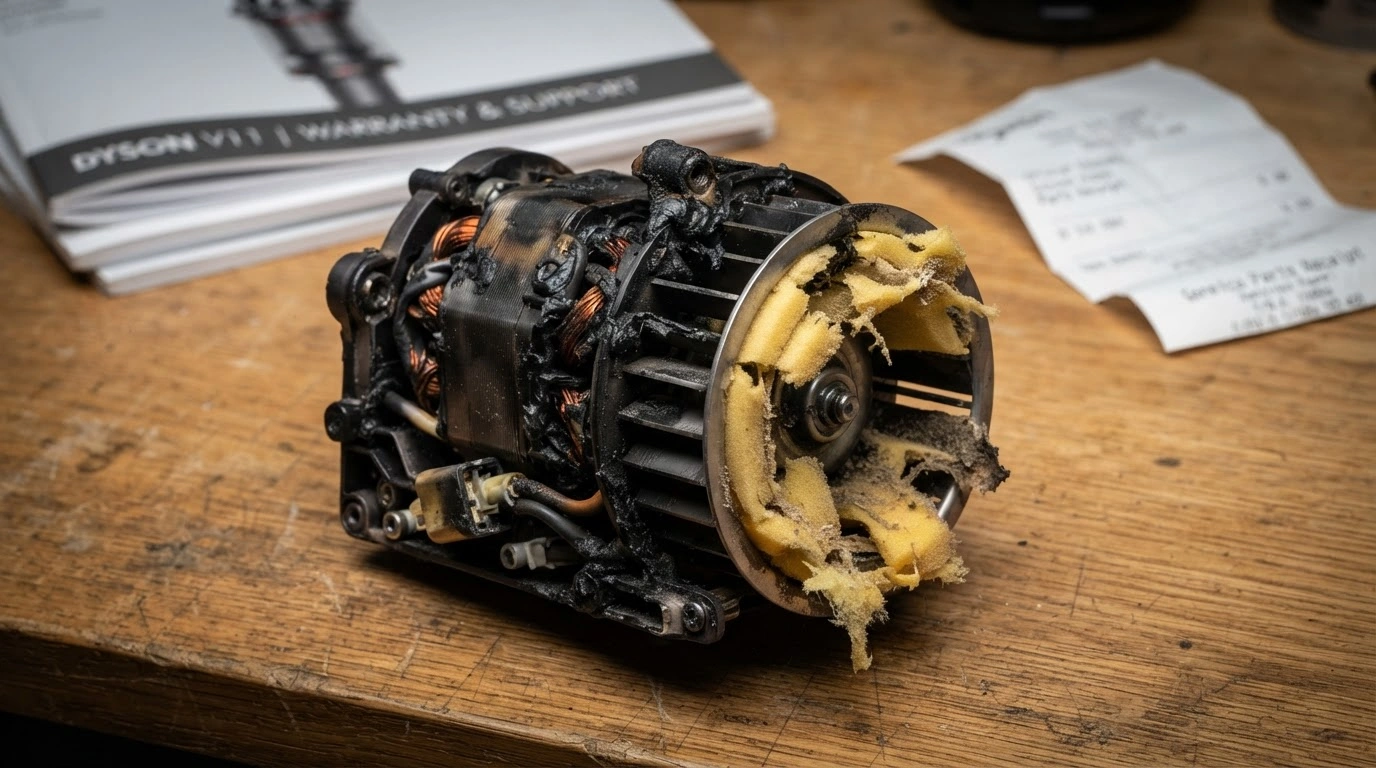
Thin Media: Cheap foam lets fine dust slip past and reach the motor. That is the failure that costs real money, since a motor is far more expensive than a filter.
The Tradeoff Is Price: Vacuum Wars found that official parts cost roughly five to six times as much as third-party ones, and over a few years that adds up. If you have no allergy concerns, that gap is a fair thing to resent.
Where Aftermarket Is Perfectly Fine?
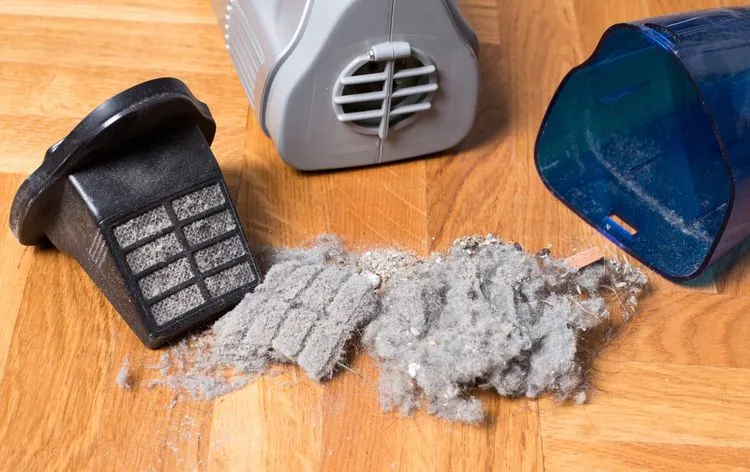
A pre-motor foam and felt filter stops coarse dust before it reaches the motor. Basic media does that well, and since it's the filter you replace most often, the savings add up.
My habit with washable foam filters is to buy a multi-pack and keep a spare. While one dries, the other runs, and you never put a damp filter back in. Most need a full day to air dry. If you are unsure which of your filters can be rinsed at all, our guide on whether you can clean a vacuum filter with water breaks down washable and non-washable types.
I tried the “Shark Navigator Lift-Away NV352” vacuum model, paid $9.99 for a 2-pack, and used it for around 8 weeks. I noticed the foam filter took 24 hours to dry completely, but it rinsed clean and regained its shape. I had a spare filter ready, which made the rotation easy. (Add a photo of both filters side by side)
Will an Aftermarket Filter Void Your Warranty?
Usually not, and this myth keeps many people overpaying. Under the Magnuson-Moss Warranty Act, a company generally cannot void your warranty just because you used another company's part. The Federal Trade Commission lays this out in its warranty guidance for businesses, including the point that a brand cannot require you to use its named parts unless it supplies them free.
There is a catch. A company can still deny a claim if the part itself caused the damage. If a flimsy foam filter tears and clogs the motor, expect a denial. Keep your receipts and the filter's part number. Liquid damage is a different story, and manufacturers deny those claims more readily, as we covered in what happens if water gets inside a vacuum cleaner. I am not a lawyer, so check your warranty booklet for the exact wording.
How to Vet an Aftermarket Filter Before You Buy?
- Match the manufacturer part number, not just "fits Shark" or "fits Dyson." Compare it against the number in your manual.
- Look for printed test results on any HEPA filter. Genuine HEPA filters typically carry a serial number and test data on the filter itself. A generic with a vague "HEPA-like" claim and nothing printed is a gamble.
- Press the gasket. Soft and springy is good. Hard plastic that does not compress will leak.
- Hold it next to your old one. Pleat count, thickness, and frame size should be close. A visibly thinner filter is a warning sign.
- Buy from a seller with easy returns, then run the vacuum a few times. A dusty smell at the exhaust means air is bypassing the filter.
My Verdict
I would split the decision. Buy the OEM HEPA or exhaust filter, especially if anyone at home has allergies or asthma. Buy an aftermarket for the foam and felt pre-motor filters you swap every few months. Don't let the debate distract you from the bigger issue: a clean filter that fits beats a genuine one you forgot to replace. Check your manual for the replacement schedule and stick to it.