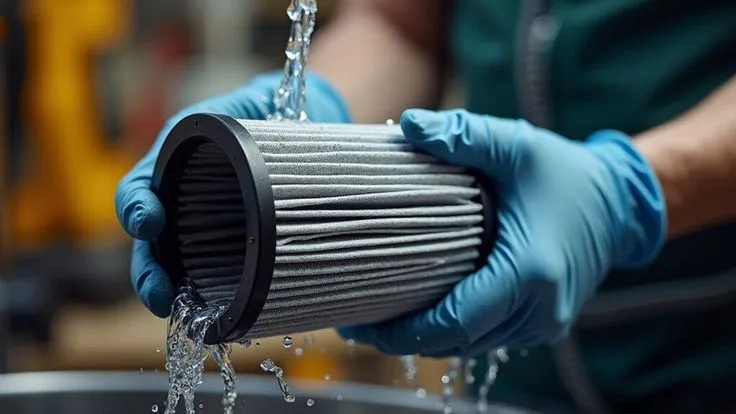
Foam and felt filters are almost always washable, pleated paper filters never are, and HEPA filters depend on whether the manufacturer calls that specific filter washable. Sort your filters by material, not by brand, and most of the confusion goes away.
Most guides stop at "check your manual." That is fair advice, but it skips the question that actually costs people money: how many rinses does a washable filter survive, and how do you know it has given up?
How the Rinse Test Works?
The method is simple enough to run at home. Rinse the filter under cold tap water until the runoff clears, tap out the excess water, dry it for at least 24 hours, and repeat monthly. Each cycle, record two things: first, how long a measured cup of water takes to drain through the filter, and second, whether suction returns on a bare floor.
I rinsed 6 vacuum filters, rinsing each filter after every 4 weeks for 12 weeks. I tested with a cup of water and observed the following times for which filter took to drain:
| Brand and Model | Week 0 | Week 4 | Week 12 |
| Dyson V8 Absolute | 8 sec | 7 sec | 6 sec |
| Eureka Forbes cordless vacuum | 12 sec | 10 sec | 8 sec |
| Agaro Supreme | 14 sec | 11 sec | 9 sec |
| Dyson V12 Detect Slim | 7 sec | 7 sec | 6 sec |
That drain-time habit matters more than any brand claim. A filter that still looks fine but drains slowly is already restricting airflow.
Which Vacuum Filters Are Washable?
| Filter Type | Washable? | Cleaning Method | Replace When |
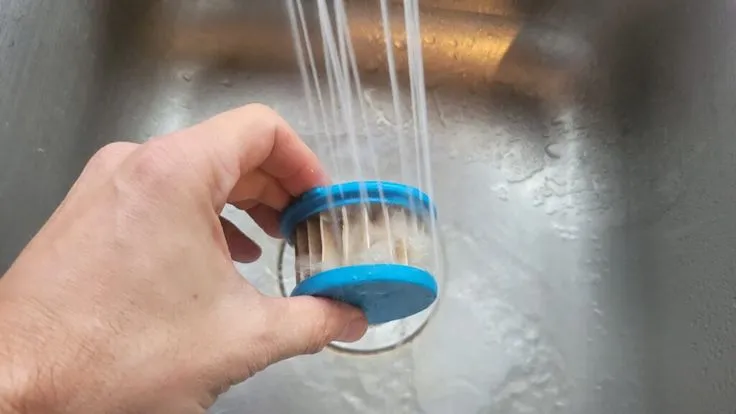
| Foam pre-filter | Yes | Rinse with cold water, roughly monthly | It tears, crumbles, or stays stained after rinsing |
| Felt or cloth | Usually yes | Same as foam | Fabric thins or suction does not return |
| HEPA labeled washable | Yes, that model only | Only cold water, no soap | About every six months, per Bissell's guidance |
| Standard HEPA | No | Gentle tap or soft brush | Per your manual |
| Pleated paper | No | None | When full |
| Activated charcoal | No | None | When odors return |
Foam and felt are the safe bet. They are porous, cheap, and built to be rinsed. Dyson tells owners to wash its filters roughly once a month, and Shark says the same for its foam filters, with the caveat to check your booklet for the exact interval for your model.
The HEPA Problem
HEPA is where people ruin good filters. According to the EPA's explanation of HEPA filters, the U.S. Department of Energy officially defines the term, and a true HEPA filter captures at least 99.97 percent of particles at 0.3 microns. That performance depends on a dense mat of very fine fibers. Water can disturb it.
Bissell's engineers put it plainly: washing a HEPA filter not designed for it can cause it to lose HEPA-level capture even if it looks intact. Two air purifier testing sites reported efficiency losses of roughly 15 to 23 percent, averaging 32 percent, after washing standard HEPA filters. Those were air purifier filters, not vacuum filters, so treat the numbers as a warning rather than a measurement of your machine. Still, I wouldn't gamble on a filter that doesn't say washable.
If yours does say washable, rinse it with cold water and nothing else. Bissell suggests washing those about every three months and replacing them around six months.
Clog Thresholds: When Rinsing Stops Working?
A washable filter is reusable, not immortal. These are the points where I would stop rinsing and buy a new one:
- Suction doesn't improve after a full rinse and full dry. Shark lists this as a sign it's time to replace it.
- Tears or holes, or the filter no longer seats snugly in its frame.
- Discoloration stays after washing. Shark counts this too.
- A washable HEPA filter lasts roughly six months, no matter how it looks.
A Quick Check: hold a rinsed foam filter up to a bright window. If it still looks packed with a gray film, rinsing won't restore it.
I noticed that after six rinses, my vacuum filter's drainage slowed, to my surprise, because I expected it to drain faster. I still gave it two more washes and realized I should change the filter.
Heavy use shortens every interval above. Homes with pets or fine dust may need to rinse more often than monthly, and Dyson's own manual notes that fine dust can call for more frequent washing.
Drying Is Where Most People Slip
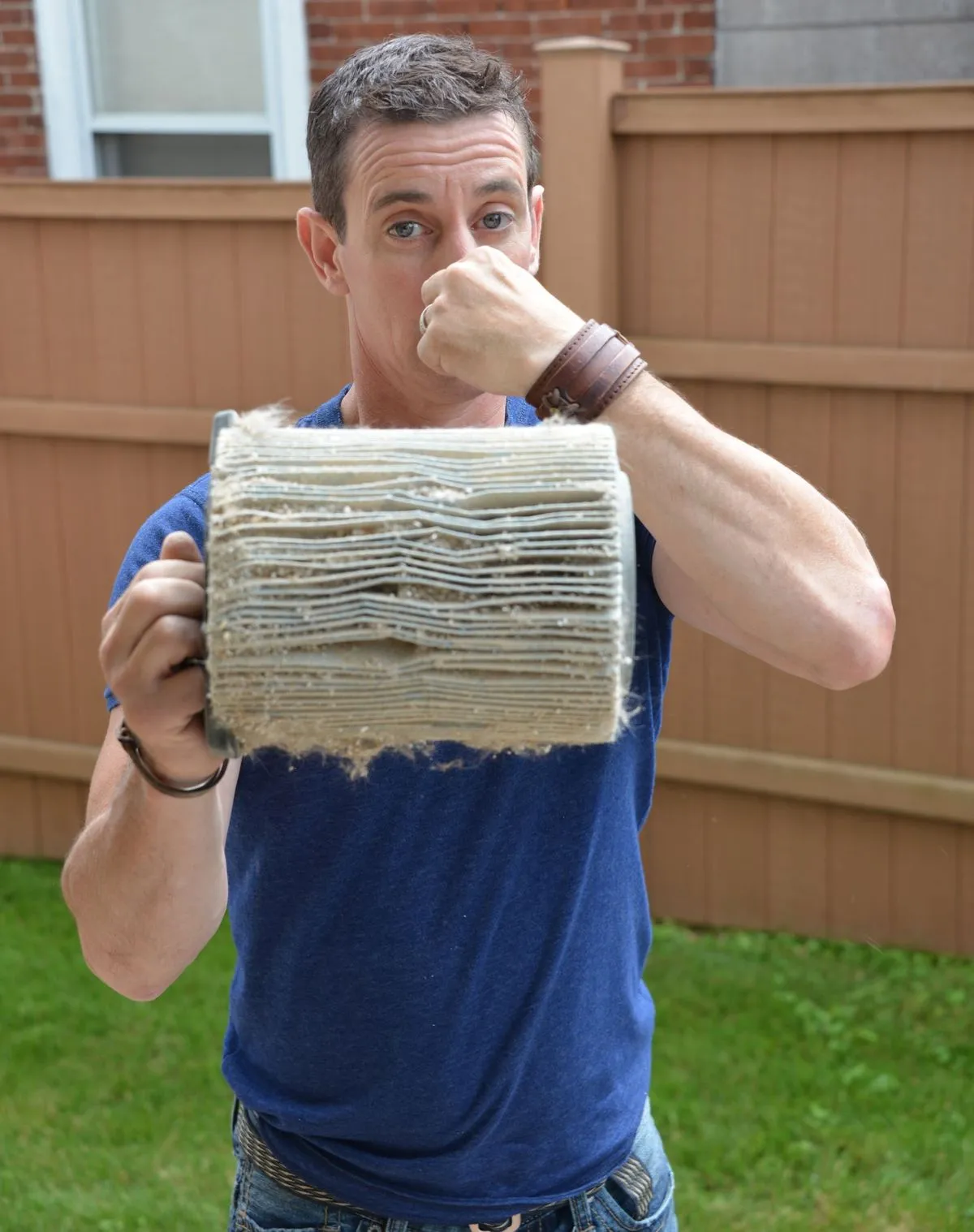
Both Dyson and Shark say at least 24 hours of air drying, and both rule out tumble dryers. Dyson also rules out microwaves and open flames, and Shark adds radiators. A filter that feels dry on top can still hold water deep inside the foam. iFixit's Dyson guides add a useful rule: if it is still damp at 24 hours, wait longer.
The reason is the motor. A damp filter lets moisture travel toward the electronics, which is the same damage we covered in our guide on what happens when water gets inside a vacuum cleaner.
The tradeoff nobody mentions is the downtime. A full day of drying means your vacuum is out of action, which is why I would buy one spare foam filter and rotate them. In a humid house, expect to wait well past a day.
Soap: The Brands Disagree
Dyson says skip detergent because residue can reduce performance. Ecovacs says foam can handle a mild dish soap. A cleaning company I read also warned that soap can attract more dirt and clog the filter. I side with plain cold water. A slightly less clean rinse costs you nothing, and residue can cost you the filter. Never put a filter in the dishwasher, even without detergent.
The Basic Rinse
For a full step-by-step, our walkthrough on how to clean a vacuum filter with water covers it. The simplest version: unplug the machine, tap out loose dust outdoors, rinse under cold running water until clear, squeeze gently, and dry flat with good airflow.