
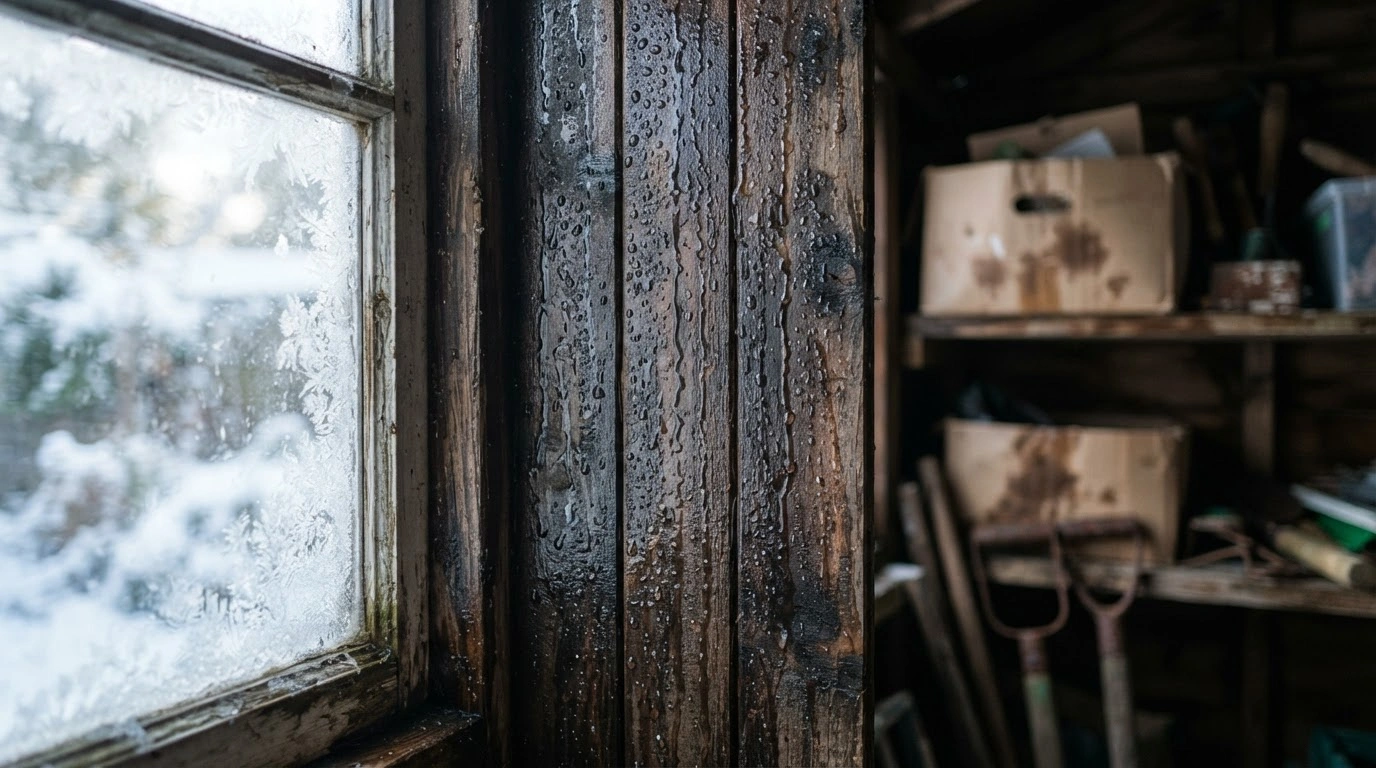
The first truly cold morning of the season often reveals problems you didn't know you had. You open the shed door to grab a rake or a bag of ice melt, and the underside of the roof is beaded with water. Maybe you see a damp patch on the floor, smell something musty, or notice a thin film of frost on the inside of the metal panels. Your first thought is probably "the roof is leaking." In most cases, it isn't. What you're looking at is condensation, and it's one of the most common cold-weather complaints from people who store tools, bikes, patio cushions, and lawn equipment outdoors. The good news is that once you understand what's driving it, the fix is usually simple and inexpensive.
What Causes Condensation Inside a Shed?
Condensation forms when warm, moisture-laden air touches a surface that's colder than the air's dew point. In cold weather, an outbuilding's walls and roof can drop below freezing overnight while the air inside stays slightly warmer and holds more water vapor than you'd expect. That vapor settles out on the coldest surfaces it can find: metal roofing, single-pane windows, uninsulated steel walls, and the inside of a plastic roof panel.
Where does the moisture come from? Several sources, often working together:
- The ground. Bare soil or a concrete slab without a vapor barrier releases water vapor continuously, especially after rain or snowmelt.
- Wet items. Damp lawn mowers, snow-covered boots, hoses, and pool equipment all give off moisture as they dry.
- Temperature swings. Sunny winter afternoons warm the interior; clear, cold nights drop the surface temperature fast. That daily cycle is a condensation machine.
- Poor airflow. Without ventilation, humid air has nowhere to go, so it lingers until it condenses.
Metal and resin structures are more prone to this than wood because their surfaces chill quickly and don't absorb any moisture. Wood sheds aren't immune, though, and prolonged dampness in a timber building can lead to rot, swollen doors, and mold on stored belongings.
How to Tell Condensation From a Roof Leak
Before you spend money on sealant, confirm the diagnosis. Condensation tends to appear as an even layer of droplets across a whole panel, shows up on cold mornings regardless of whether it rained, and often disappears by afternoon once the sun warms things up. A leak, by contrast, leaves a concentrated drip line or stain beneath a specific seam, screw, or joint, and gets worse during or immediately after precipitation.
Quick test: Wipe a section of the roof dry on a dry evening, then check it at dawn. If it's wet again with no rain overnight, you're dealing with moisture from inside the building.
How to Fix Shed Condensation
1. Improve ventilation
Airflow is the single most effective remedy. Install vents near the top of the structure on opposite sides so warm, humid air can escape while cooler, drier air enters. Louvered gable vents, soffit vents, or a small wind-driven turbine all work. If the shed has windows, cracking one open on dry days helps enormously. Aim for cross-ventilation rather than a single opening.
2. Control ground moisture
If the floor is bare earth, lay a heavy polyethylene vapor barrier and cover it with gravel, pavers, or a raised wooden floor. For a concrete slab, apply a concrete sealer to slow moisture migration. Raising the whole building a few inches on blocks or a gravel pad also keeps the base dry and improves airflow underneath.
3. Add insulation with a vapor barrier
Insulating the roof and walls keeps interior surfaces closer to the air temperature, so vapor has fewer cold spots to settle on. Foil-faced foam board, closed-cell spray foam, or anti-condensation roof underlayment (a fleece-like layer that absorbs and slowly releases moisture) all work well in metal buildings. Make sure the vapor barrier faces the warm side, and that insulation doesn't block your vents.
4. Store items dry
Let mowers, bikes, and garden tools dry before storing them. Keep cushions and fabric in sealed plastic bins. Store firewood elsewhere if possible, since freshly split logs release a surprising amount of water as they season.
5. Use a moisture absorber or small heater
In tight spaces, a tub of calcium chloride desiccant or a rechargeable silica gel dehumidifier can pull moisture from the air for weeks. If the shed has power, a low-wattage tube heater or thermostatically controlled heater keeps surfaces just above dew point without running up your electric bill.
6. Seal gaps—but not all of them
Seal gaps around the base and doors where ground moisture and rain can blow in, but leave your intentional vents open. Over-sealing a shed is one of the most common mistakes, and it almost always makes condensation worse.
When to Call It Good
You don't need to eliminate every trace of moisture. The goal is to keep humidity low enough that water doesn't pool on surfaces or settle into stored items. If you've added cross-ventilation, addressed the floor, and the interior stays dry through a week of freeze-thaw cycles, you're in good shape. Your favorite garden shed should protect what's inside it through every season, and with these adjustments it will do exactly that, winter after winter.


