Replacing an entry door is possibly one of the major upgrades for a home. The entrance door, being the first thing any visitor would notice, should be perfect in terms of size and curb appeal. It changes the way a property looks from the outside and also plays a crucial role in improving home security. A door that does not fit into its frame correctly leaves gaps that can compromise security and make the entryway look awkward.
Therefore, accurate measurements are important for the entry door, especially when ordering a replacement door online. An incorrect measurement does not just mean a poor fit. It can also lead to additional costs and complications during the installation. This article breaks down the important process of measuring an entry door.
How to Measure for a Door Replacement?
Many homeowners prefer to replace only the door slab to save money. However, this is not a very efficient route to take. If the door is worn out, the frames or jambs surrounding it are likely in a similar condition.
In such a situation, it is best to replace the whole unit. However, if the door frame is still in good condition and only the door itself needs replacing, the following steps apply:
Measure the Door Height
- Make sure to measure the height of the existing door from top to bottom.
- The next step is to take three measurements: the left, middle, and right sides.
- For proper measurement, use the smallest of the three.
Measure the Door Width
- Measure the width at three points: top, middle, and bottom.
- Here as well, use the smallest measurement.
Measure the Thickness
- The majority of entry doors are 1 ¾ inches thick. Measure at the edge of the door to confirm this before moving forward.
Mark the Hinge Locations
- Measure from the top of the door down to the top of each hinge and record the hinge height and width.
- Take note of the number of hinges and how they are positioned on the door. Most of the time, doors have three hinges.
When it comes to hinges, there are two broad categories: Standard (American) and European. American hinge placement evenly spaces the hinges along the door height, giving it a balanced look.
European placement puts two hinges near the top of the door. Given that gravity puts the most strain on the upper portion of a door, this setup does a better job at preventing sagging. This would also require fewer adjustments over time.
How to Measure for a Complete Door System Replacement?
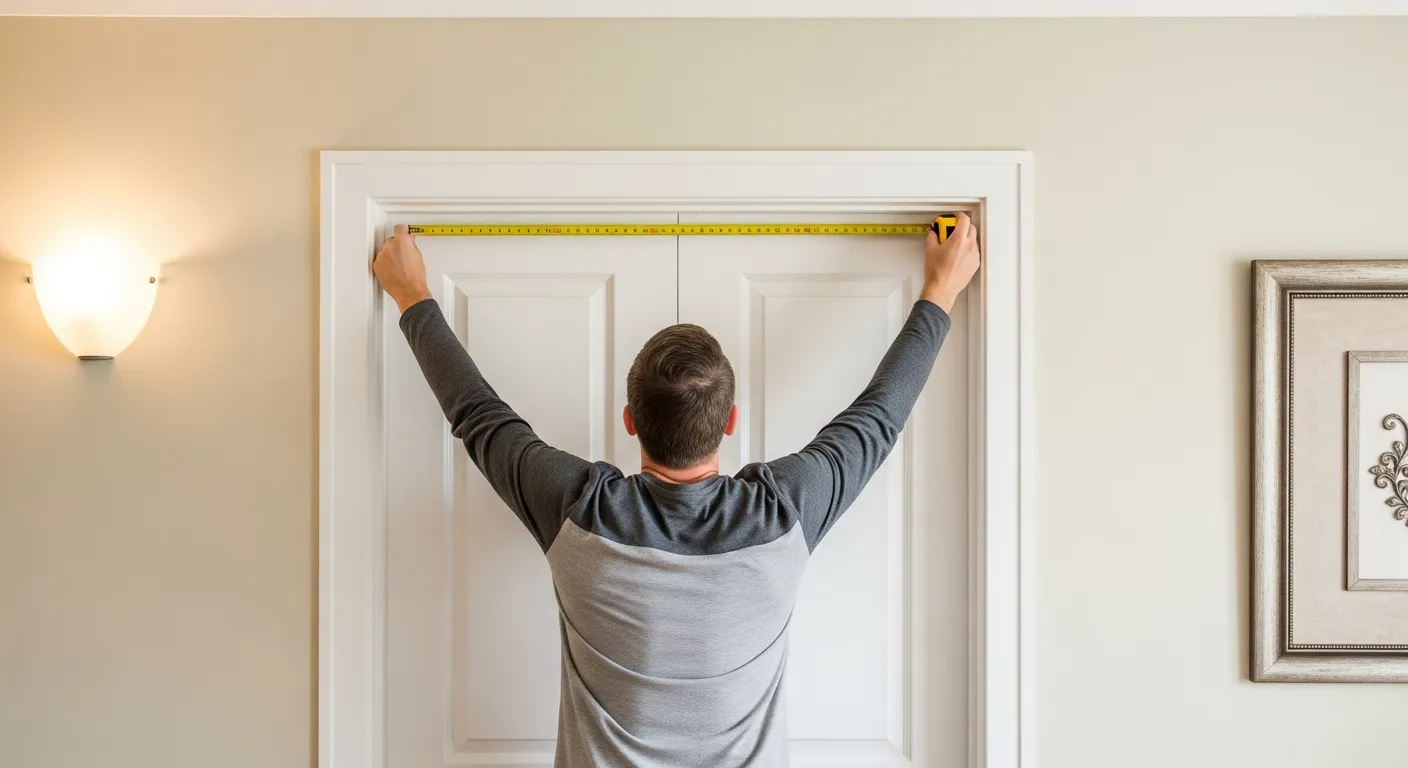
Sometimes, replacing just the slab isn't enough. If the goal is to update the overall look, then start by changing the wood type or style. Additionally, if the jamb and frame have worn out over time, replacing the entire door system is a better option.
In this case, measurements shift from the door slab itself to the dimensions of the jamb and sill for exterior doors, or the frame for interior doors.
Remove the Trim
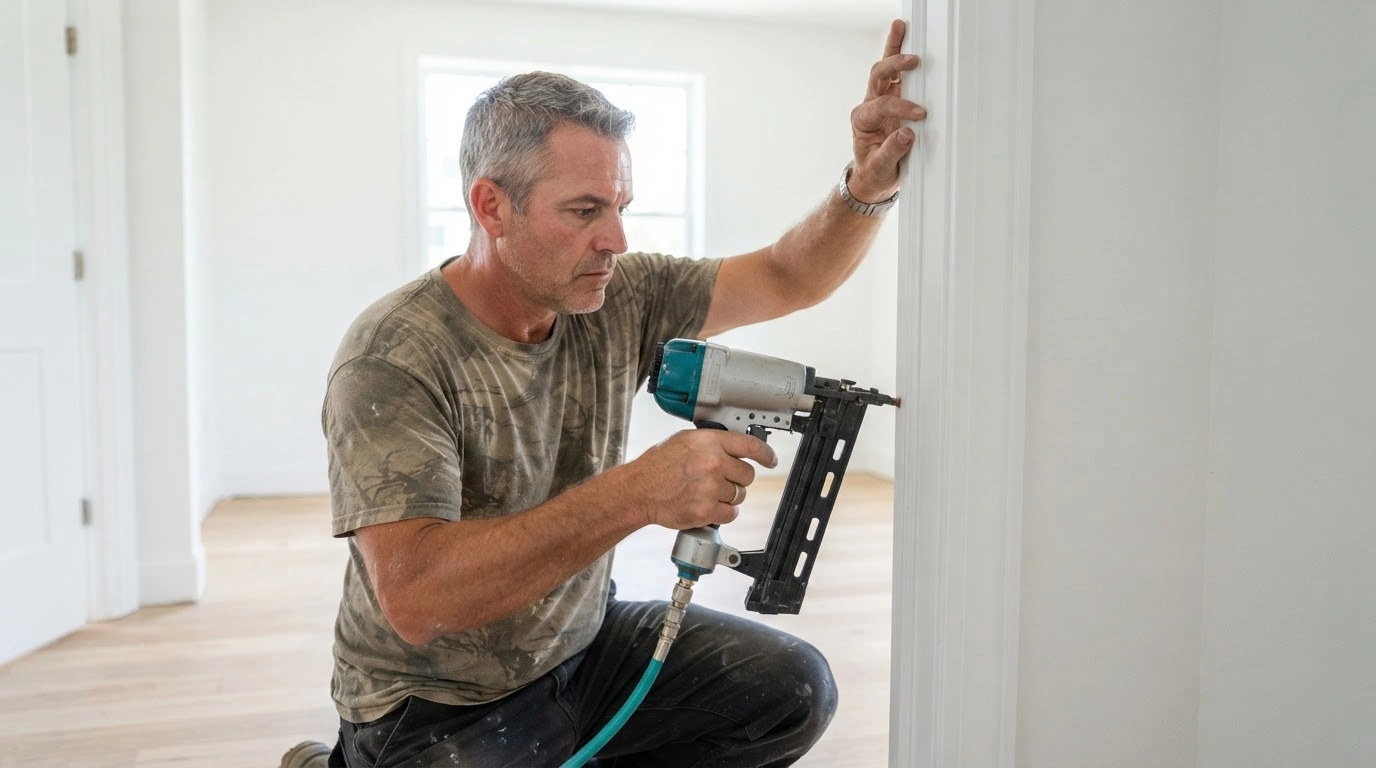
Before any measuring begins, the trim along one side of the door jamb or frame needs to be removed. A pry bar or stiff putty knife works well for this.
Measure the Jambs’ Width
Measure the width of the door jamb from the outer edge on one side to the outer edge on the other. Take this measurement at three points: near the top, through the middle, and near the bottom. Record the biggest measurement of the three as the final width of the door unit.
Measure the Frame Depth
Measure the depth of the frame from the inside edge to the outside edge. Make sure to leave out the brickmould and any trim pieces from this measurement.
Measure the Frame Height
Measure the height of the door frame at three points and record the largest measurement.
- For exterior doors, measure from the bottom of the threshold up to the top edge of the horizontal door jamb. If interior flooring runs up against the threshold and blocks access to that point, the sill height must be measured separately.
- For interior doors, the measurement runs from the floor up to the top edge of the horizontal door jamb.
- Measure the Jamb Depth
Measure the depth of the side jamb from the interior edge to the exterior edge, not including any interior trim. This number should reflect the full thickness of the wall, without trim or siding factored in. Mostly, this measurement falls around 4-9/16 inches or 4- ⅝ inches.
Determine the Door Swing
Once all measurements are recorded, the final step is to determine the door swing. This will complete the process, and you can safely place an order according to your measurements.
Conclusion
Measuring an entry door is a meticulous process that demands the homeowner's attention. Every step, from noting the slab's height and width to checking the jamb depth, matters. The effort put into this measurement saves considerable trouble down the line.