
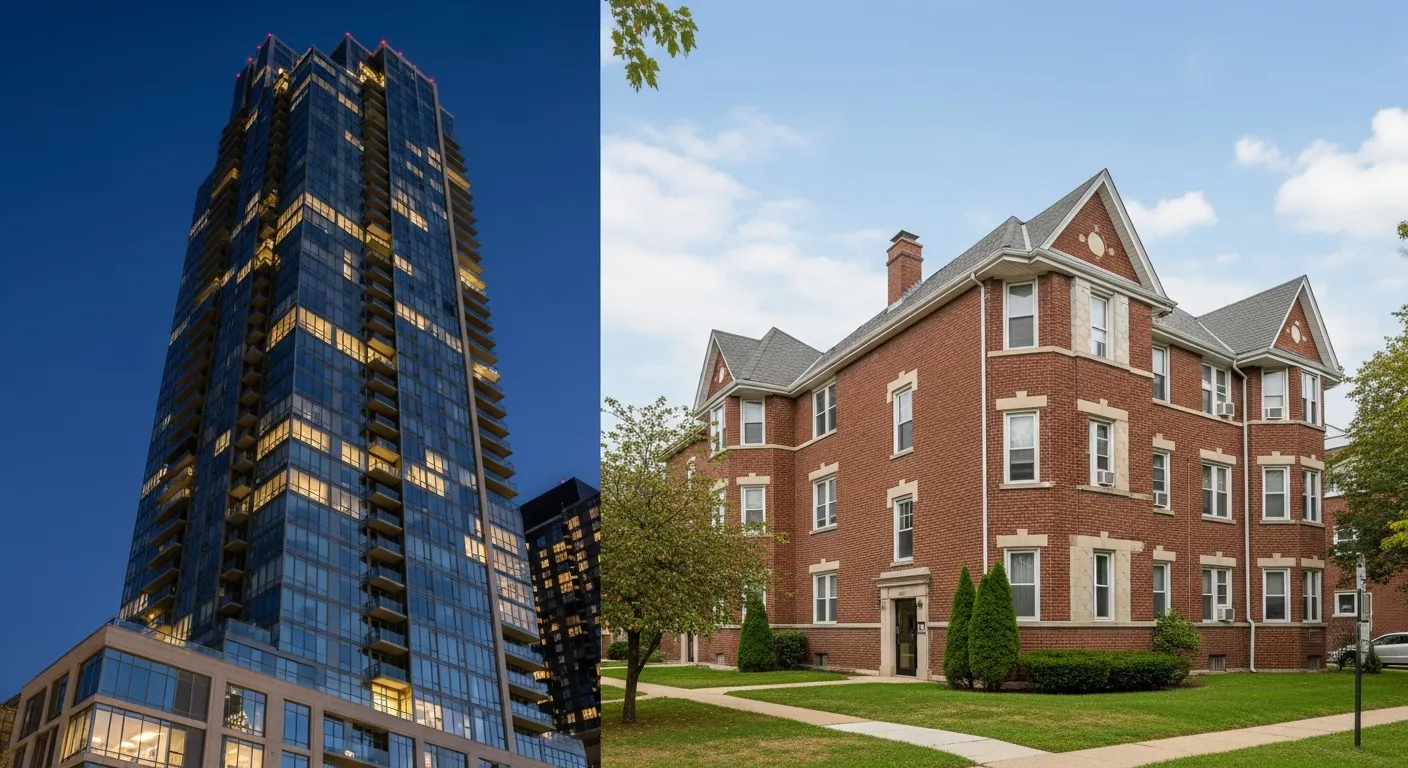
Condominiums and apartments might seem identical when you see them for the first time. However, if you have to decide which is best between the two, knowing their distinct features is important. Whether the low-maintenance lifestyle of a condominium is a good option or an apartment with fee flexibility, understanding their key differences will help you make the best choice. This blog describes in detail a condominium and an apartment, along with their key differences.
What is a Condominium?
Also known as a condo, a condominium is a kind of residential property in which each individual owns a unit independently. The living options and amenities of a condo vary depending on the region, style, and location . The owner owns only the unit's interior, not the common amenities such as the pool, gym, parking lots, hallways, or lobbies. These facilities are shared by all the owners.
Depending on the facilities and services offered, Condo owners pay monthly HOA fees. A condominium provides a sense of community and amenities that may not be found in a single-family home. Also, HOAs impose rules on noise restrictions, pet ownership standards, and unit alterations. All owners have to follow these rules.
What is an Apartment?
Also known as a flat, an apartment is a living unit in a large structure made for one or more persons or a family. Each apartment is separate and allows for one or more people and families. Apartments are rented from a property management firm or a landlord; renters do not possess the property. Tenants have to pay monthly rent to use the flat for a specified period, which may range from a few months to several years. Apartments come in various sizes and styles, and there is ownership of common amenities such as corridors and parking lots. These amenities are maintained by the landlord or property management. Owners are also responsible for maintaining and repairing the unit. However, it is mandatory for the renters to report any concerns and take care of basic maintenance.
Key Differences Between a Condominium and an Apartment

Possession
Possession is one of the main differences between a condominium and an apartment.
-
Condominium: Condominiums are owned by individuals and are rented privately. Renting involves a one-on-one interaction between the owner and the potential tenant. The owner of a condominium enjoys the personal freedom to choose the tenant and the rental terms and conditions. In some cases, a condominium has a professional property management company that enforces the property's basic rules and regulations and manages the common area.
-
Apartment: Apartments are owned by property management companies, which ensure uniformity across all housing units. Apartments are generally located in residential buildings, complexes, or entire communities. Property management companies provide clear instructions to residents regarding common areas and their units. The residents have to follow all the rules. Additionally, the company provides an on-site leasing office to the individuals. This helps the individuals during their tenancy or even when looking for another unit in the same complex or community.
Maintenance
The quick resolution to the problem also plays an important role while renting. At times, the time taken to solve the problem is usually longer in a condominium.
-
Condominium: The individual owner of the condominium is responsible for maintaining it. Therefore, if you've got any problem, you'll have to wait until the owner responds. This may bother you, especially if they are on vacation or busy with other things.
-
Apartment: If you're stuck with a problem in an apartment, you do not have to worry much, as the property owner or management company usually responds faster. Therefore, if you've got any issues affecting other units in the building, they'll reach out sooner.
Fees
There is a difference in the fee structure of a condominium and an apartment. Fees in apartments are generally standard, but they vary in a condominium.
-
Condominium: Fees in a condominium are decided by its owners. Therefore, the fees may change from one condo to another. Before making your final decision, ask whether there's any flexibility or a possible fee reduction.
-
Apartment: Usually, an apartment fee includes first and last month’s rent, as well as a security deposit. If you're bringing your pet to your new home, you may also need to pay an additional pet fee at the time of your initial payment. In some cases, you may also have to pay an application fee before lease signing.
Facilities
-
Condominium: In a condominium, you can find more personalized touch than in other rental options. Rather than basic features, you might find different customized finishes such as hardwood flooring, granite countertops, and beautiful backsplashes in the kitchen. They are all chosen by the landlord/owner. Based on the property's location and size, you can find luxurious amenities such as a gym, garage parking, or an indoor or outdoor pool.
-
Apartment: There's less scope for customization in an apartment. Most apartment complexes offer similar units, with some variation in amenities and quality. However, apartments offer shared amenities such as outdoor pools, laundry facilities, and gyms. In prime locations, you may also find additional amenities such as tennis courts, dog parks, and valet services.
Conclusion
Knowing about condominiums and apartments is vital, especially when you are exploring a home. This is because they look physically alike, but their features and amenities differ. Even the ownership and rules are distinct. Condominiums are privately owned and rented, whereas apartments are owned and managed by property management.